A single tip can reopen a cold case, lead investigators to missing evidence, or help a grieving family finally find answers. But what happens when someone knowingly gives police false information?
In Texas, providing false information to police during a criminal investigation can result in criminal charges, fines, and jail time.
Law enforcement agencies rely on witnesses to help solve crimes. Even information that surfaces decades later can be valuable. However, there is a legal difference between an honest mistake and a deliberate attempt to mislead investigators.
What Texas law says about false information to police
Texas Penal Code Section 37.08 addresses false reports made to law enforcement officers and certain investigators.
Under Texas Penal Code Section 37.08, a person commits an offense when they knowingly make a materially false statement to an authorized investigator with the intent to deceive.
The offense is classified as a Class B misdemeanor.
A conviction can carry:
Up to 180 days in county jail. A fine of up to $2,000. Both jail time and a fine.
The law does not require someone to invent an entire crime. A knowingly false statement about an important detail in an investigation may be enough to violate the statute.
What happens when someone makes a false crime report?
Law enforcement investigations require personnel, equipment, and resources. Knowingly false crime reports can divert those resources.
Texas Penal Code Section 42.06 addresses certain false reports involving crimes or emergencies.
A person who knowingly communicates a false or baseless report that meets the statute’s requirements may face a Class A misdemeanor. Certain reports involving schools, public transportation, or essential public services can result in felony charges.
Other laws may apply when false reports trigger dangerous emergency responses.
Why false information can hurt cold case investigations
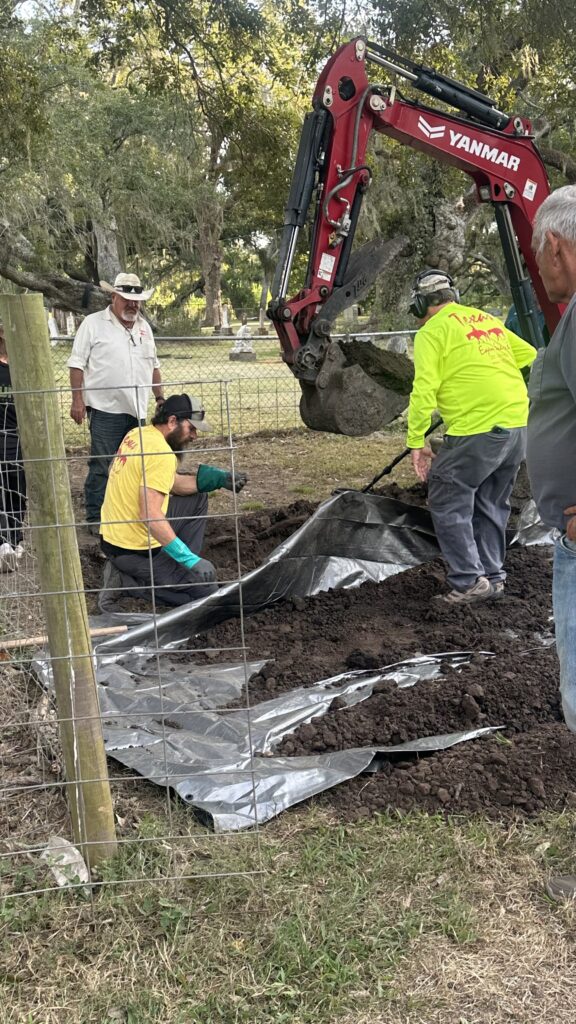
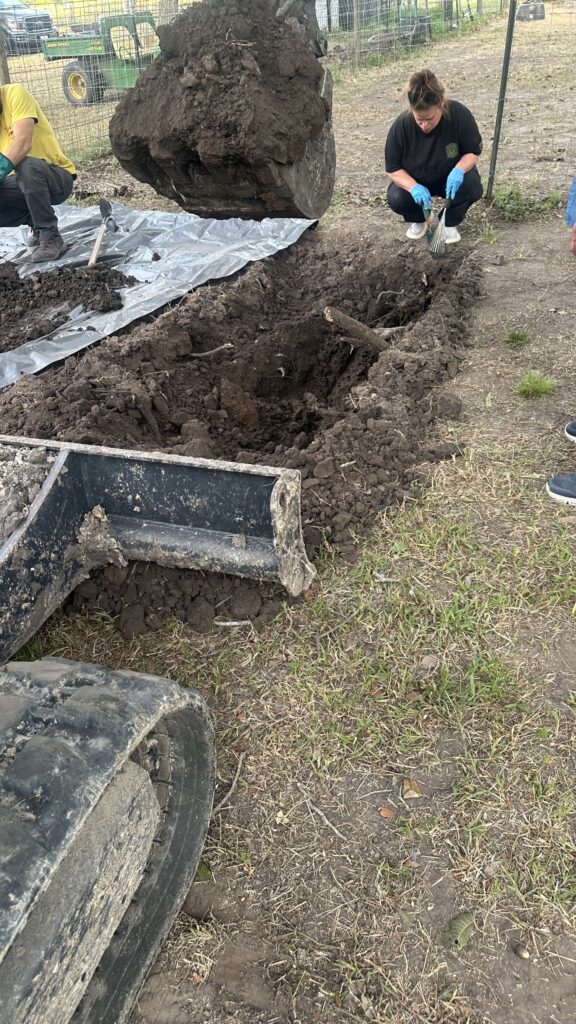
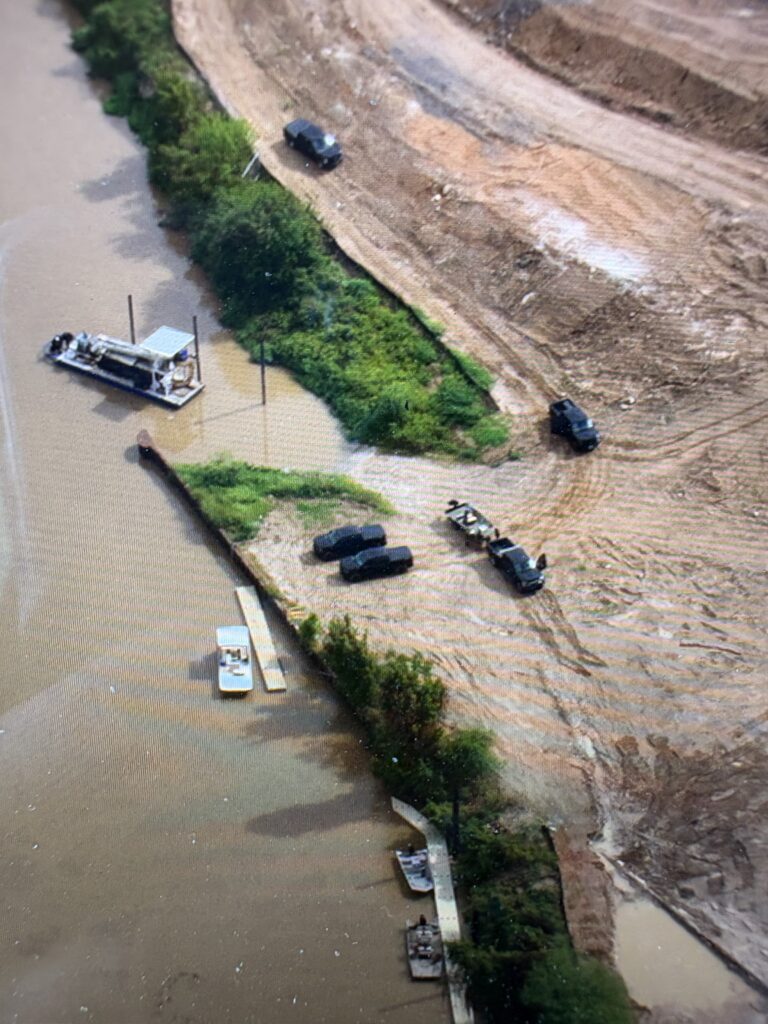
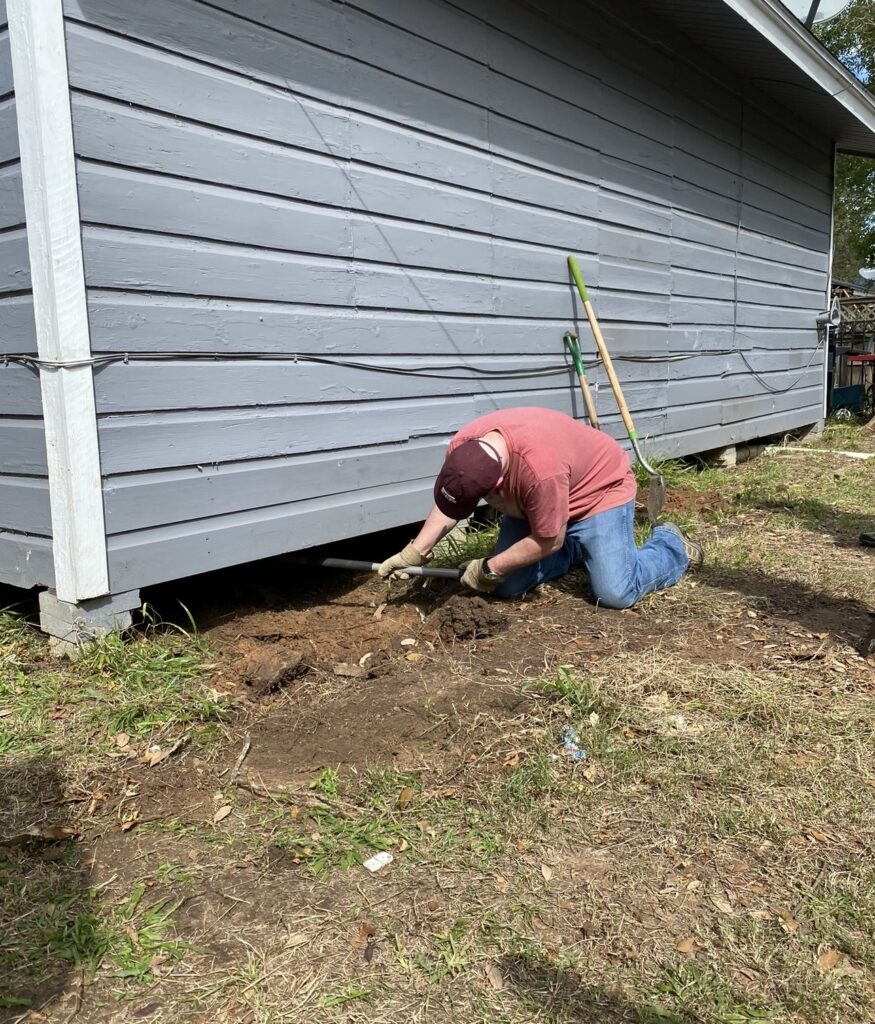
Search crews excavate an area near a Brazoria County cemetery after new witness information raised questions about the possible location of Rebecca Beard’s remains.
Cold cases often depend on information that surfaces years or even decades after the original investigation.
Witnesses may remember a conversation, recognize a location, or decide to share information they previously withheld.
These tips deserve careful consideration.
But knowingly fabricated information can send investigators in the wrong direction.
It can also consume investigative resources, lead to unnecessary searches, and create false hope for families who have spent years waiting for answers.
When investigators search a property or examine a possible burial site, the information that prompted the search must be evaluated alongside physical evidence and independent corroboration.
A witness statement alone does not establish that a crime occurred at a particular location.
Being mistaken is not the same as lying
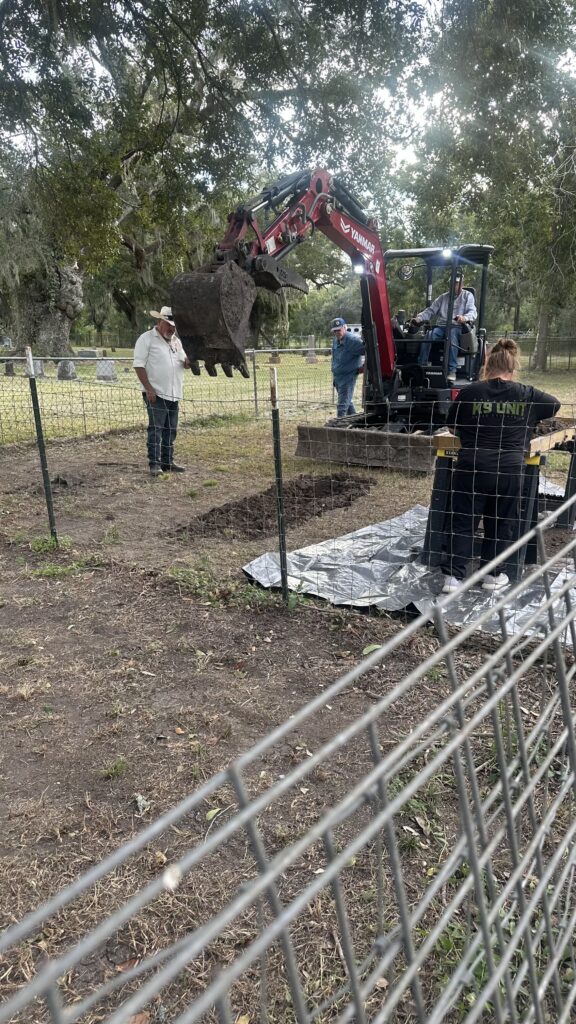
An excavation near a Brazoria County cemetery during the renewed search for Rebecca Beard, who disappeared in 1986. Investigators examined the area following new witness information.
This distinction is especially important.
Human memory is imperfect. Details can become unclear over time. Witnesses may confuse dates, locations, or conversations.
An honest mistake does not automatically constitute a criminal offense.
Texas Penal Code Section 37.08 requires proof that a person knowingly made a materially false statement with the intent to deceive.
Investigators must distinguish between inaccurate recollections, misunderstandings, secondhand information, and deliberate deception.
Why witnesses should still come forward
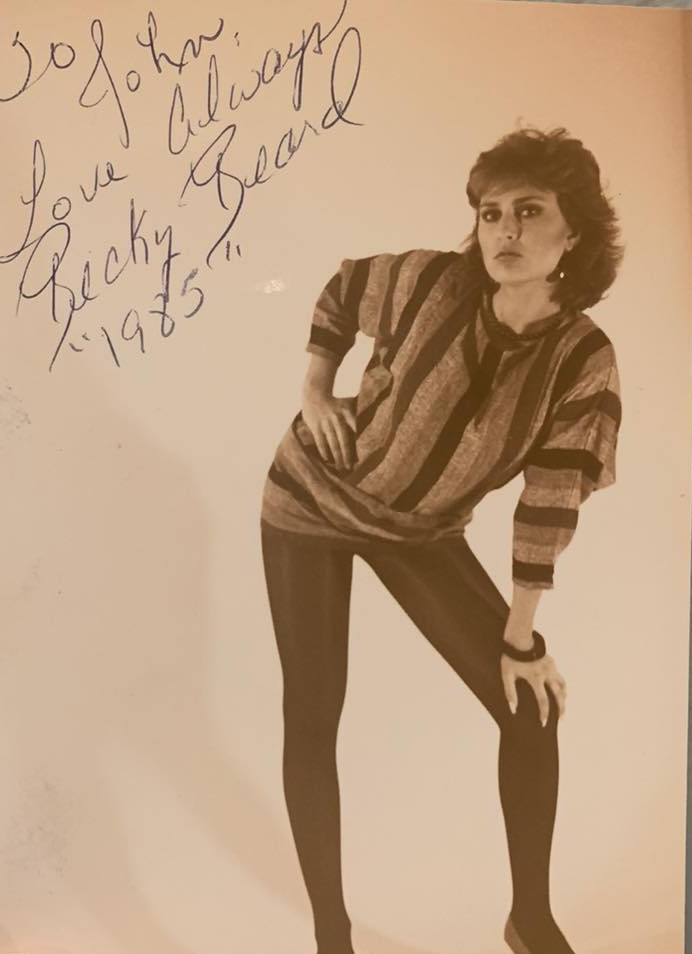
A recreation of the outfit Rebecca “Becky” Beard was reportedly wearing when she vanished in March 1986. Her family continues searching for answers 40 years later.
The possibility of criminal penalties should never discourage someone from reporting information they genuinely believe could help solve a crime.
A witness does not need to have every answer.
Someone may remember a suspicious vehicle, an unusual conversation, or activity near a location connected to an investigation.
Even decades later, that information may be important.
The best approach is to explain exactly what was personally observed, identify information learned from others, and acknowledge uncertainty.
Investigators can then determine whether the information can be independently verified.
The responsibility that comes with reporting a crime
Search crews excavate an area near a Brazoria County cemetery following new witness information in the 1986 disappearance of Rebecca “Becky” Beard.
Families of missing persons and homicide victims deserve answers based on credible evidence.
Investigators deserve truthful information. Witnesses deserve to be heard and treated fairly.
And the public deserves to understand that deliberately misleading law enforcement can carry legal consequences.
Coming forward with information can be an act of courage.
Knowingly inventing information is something entirely different.
The message is simple: If you know something about a crime, speak up. But tell the truth. Someone’s family may be depending on it.
My new book, When Two Worlds Collide During WWII, follows two families on opposite sides of World War II and the remarkable events that eventually brought their lives together in Wisconsin.
Amazon Affiliate Disclosure: As an Amazon Associate, I earn from qualifying purchases. This comes at no additional cost to you.
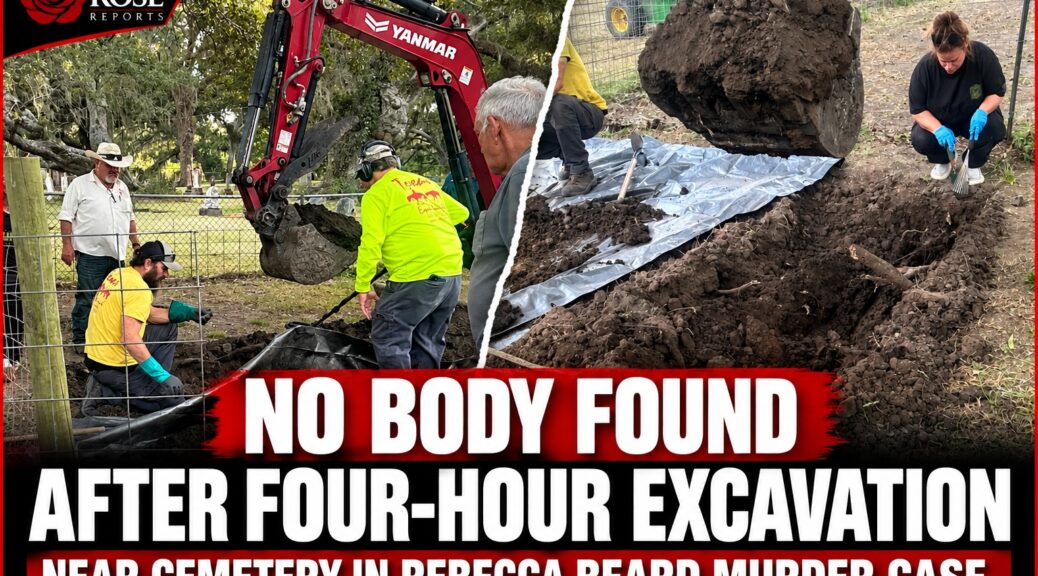
Nearly 40 years after Rebecca Beard’s murder, a four-hour excavation near a Brazoria County cemetery ended without the discovery of her remains.
The search followed a disturbing claim from a witness who says she watched the 22-year-old woman buried alive in 1986.
While I was in Dubai, a nearby property owner contacted me about repeated visits by retired Brazoria County District Attorney’s Office investigator John Blankenship. The owner also claimed he witnessed suspicious activity in the area around the time Beard disappeared.
Shortly after Blankenship spoke with the property owner, a search took place with assistance from Texas EquuSearch.
According to a source familiar with the operation, nothing was found.
Witness claims she watched Rebecca Beard buried alive
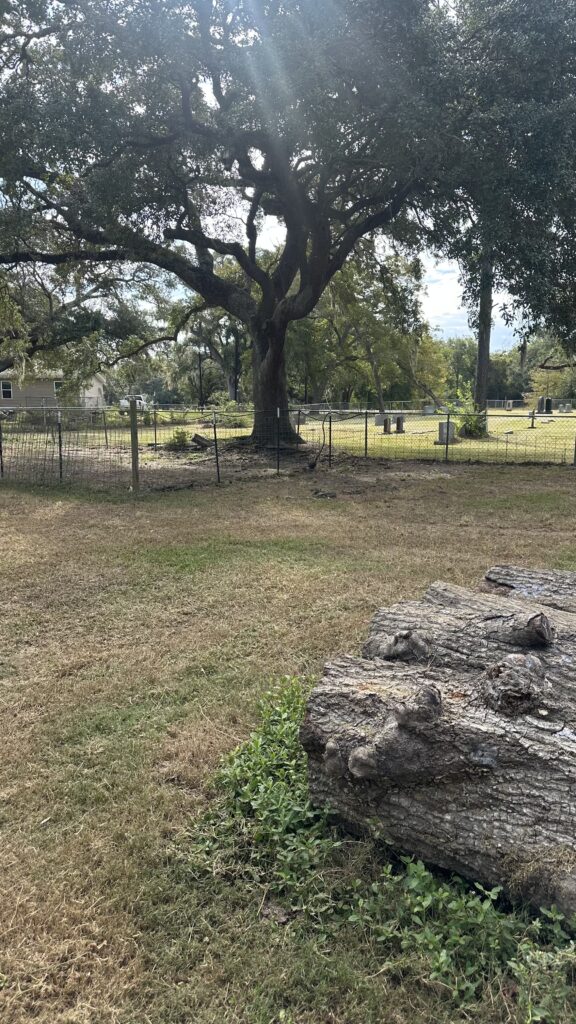
Area near the cemetery identified as a possible burial site in the Rebecca Beard murder investigation.
In January 2026, a woman came forward with a disturbing account of what she claims happened nearly 40 years earlier.
She alleged that she was present the night Beard was killed in March 1986.
According to the witness, she followed the suspects from the Excalibur Club in Freeport to an area near a cemetery.
There, she claims, she watched them bury Beard alive.
The witness identified a possible burial location near the cemetery.
Her allegations remain unverified. No publicly confirmed physical evidence has established that Beard was buried at that location.
Nevertheless, her account brought renewed attention to an area connected to one of Brazoria County’s longest-running murder mysteries.
District attorney’s investigators questioned witness credibility
Recreation showing Rebecca “Becky” Beard wearing clothing similar to what she reportedly wore the night she disappeared in 1986.
Beard’s family later met with representatives of the Brazoria County District Attorney’s Office and investigators to discuss the witness’s allegations.
During a recorded meeting, investigators explained why they did not believe the woman’s account.
They said she had changed parts of her story.
According to investigators, those inconsistencies raised concerns about her credibility.
Despite the witness’s claims, investigators did not consider her account reliable.
However, the question of where Beard’s remains are located remains unanswered.
Property owner contacts reporter about activity near cemetery
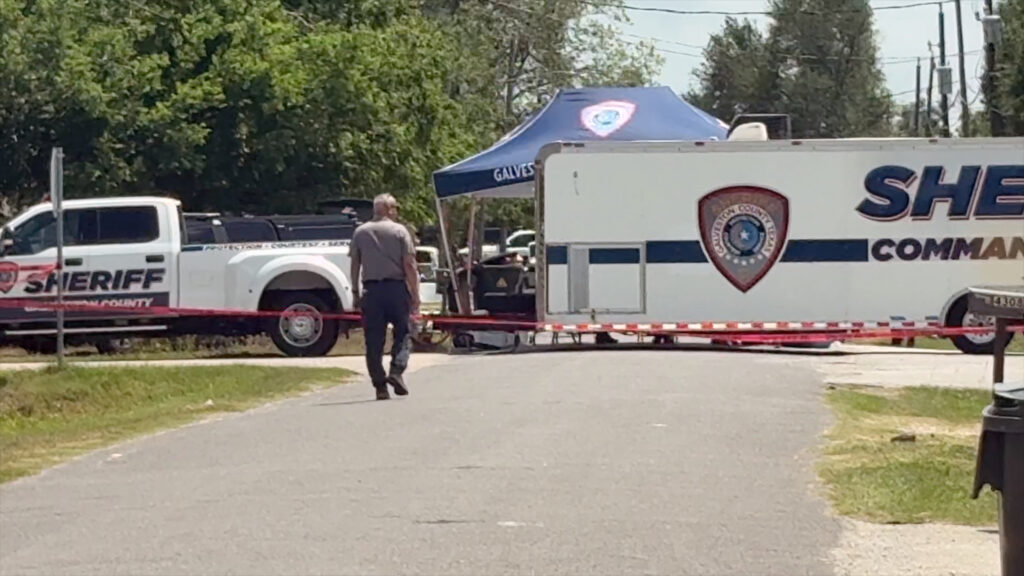
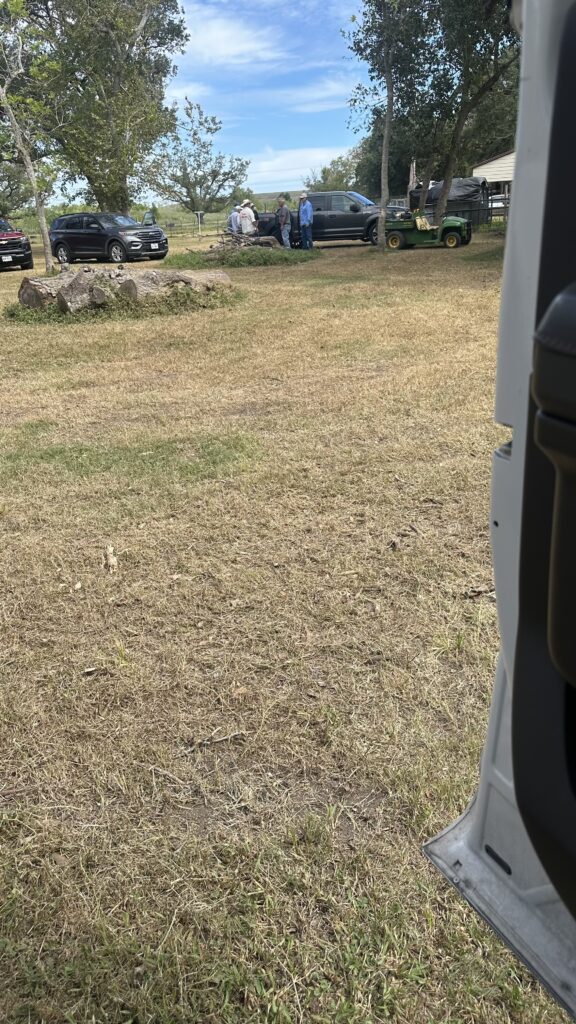
Vehicles and search personnel gather near the cemetery following renewed interest in a possible burial location for Rebecca “Becky” Beard.
While I was in Dubai in October 2026, a property owner near the cemetery contacted me about several visits by retired Brazoria County District Attorney’s Office investigator John Blankenship.
The owner said Blankenship had been looking near the area where a witness claimed Rebecca Beard was buried in 1986.
During our conversation, the owner revealed that he had witnessed suspicious activity in the same area around the time Beard disappeared.
However, he said he initially believed the activity might involve satanic rituals or the burial of animals. He had previously noticed activity in the area that led him to that suspicion.
At the time, he did not believe he had witnessed anything connected to a murder. As a result, he never contacted police.
His suspicions remain unverified, and there is no established evidence connecting satanic activity or animal burials to Beard’s murder.
Shortly after Blankenship spoke with the property owner, a search took place near the cemetery.
Four-hour excavation finds nothing
Texas EquuSearch was brought in to assist with the search near the Brazoria County cemetery.
Photographs show excavation equipment removing soil while search personnel carefully examined the ground by hand.
The search focused on an area near where a witness claimed Rebecca Beard was buried alive in 1986.
The operation lasted approximately four hours.
Despite the extensive digging, a source familiar with the search said nothing was found.
Nearly 40 years after Beard’s murder, her remains are still missing.
The latest search has not resolved the questions surrounding her disappearance or the witness’s allegations.
Rebecca Beard disappeared after visiting Freeport nightclub
Rebecca Beard was just 22 years old when she disappeared in March 1986.
She had visited the Excalibur Club in Freeport before vanishing.
Her disappearance left behind a young daughter and a family desperate for answers.
In 1995, Paul Taylor Jr. pleaded guilty to her murder.
However, Beard’s body was never recovered.
Over the years, investigators examined evidence connected to the Excalibur Club and a residence in Clute.
Former investigators also raised questions about evidence discovered during earlier searches.
Despite those investigative efforts, Beard’s remains have never been located.
Family has searched for answers for four decades
For Beard’s mother, Linda Barnes, and sister, Carol Mize, the search has continued for nearly 40 years.
Both have spent decades trying to learn what happened to Becky and where her remains may be.
The latest excavation did not provide the answers they have sought.
Investigators have questioned the cemetery witness’s credibility. The property owner’s account of suspicious activity also remains unverified.
Still, the recent search shows that possible leads continue to emerge decades after Beard’s murder.
The latest excavation raises an important question.
If investigators did not believe the cemetery witness, what prompted renewed interest in the area?
That question remains unanswered.
For Beard’s family, the ultimate goal has not changed.
They want to find Becky and bring her home.
Investigative Reporter Tammy Rose continues investigating the Rebecca Beard murder through public records, interviews, and firsthand accounts. Her documentary, Finding Becky Beard, examines evidence, witness statements, and unanswered questions surrounding the 1986 case. The documentary is available on YouTube.
My new book, When Two Worlds Collide During WWII, follows two families on opposite sides of World War II and the remarkable events that eventually brought their lives together in Wisconsin.
Amazon Affiliate Disclosure: As an Amazon Associate, I earn from qualifying purchases. This comes at no additional cost to you.
During my Dubai desert safari, I rode another camel. Unlike the camels I encountered on the beach, these camels wore protective mouth coverings and had handlers supervising the rides.
Imagine standing on one of the most beautiful beaches in the world. The sun shines over the water. Tourists stroll along the sand. You’re enjoying the first day of your dream vacation.
Then, without warning, a camel bites you in the back.
That’s exactly what happened to me on my first day in Dubai.
I traveled thousands of miles from Houston to enjoy beautiful beaches, desert adventures and unforgettable experiences.
Instead, I ended up at urgent care, a hospital and a police station.
The camel bite broke my skin. Doctors started a series of five rabies vaccinations as a precaution.
And that was only the beginning of my Dubai adventure.
After years of traveling internationally, I’ve learned one important lesson. Never underestimate the value of travel medical insurance.
Believe me, I’ve had my share of vacation medical emergencies.
A camel bite on a beautiful Dubai beach
Camels walk along Dubai’s JBR Beach with the city’s skyscrapers in the background. One of these camels later bit me in the back, breaking my skin and sending me to the hospital for rabies vaccinations.
My first day in Dubai started with excitement. I couldn’t wait to explore the beaches and take photographs.
Earlier, I watched a handler walking camels along the beach. The animals attracted attention from tourists enjoying the scenery.
Later, I noticed the camels standing without a handler nearby.
I didn’t see anyone supervising them.
The animals also had no muzzles or protective mouth coverings.
I wanted to take a photograph when one of the camels suddenly bit me in the back.
The bite broke my skin.
I never imagined that a simple vacation photograph could turn into a medical emergency.
One minute, I was enjoying a beautiful beach. The next, I was trying to figure out where to get medical attention in a foreign country.
From urgent care to the hospital for rabies shots
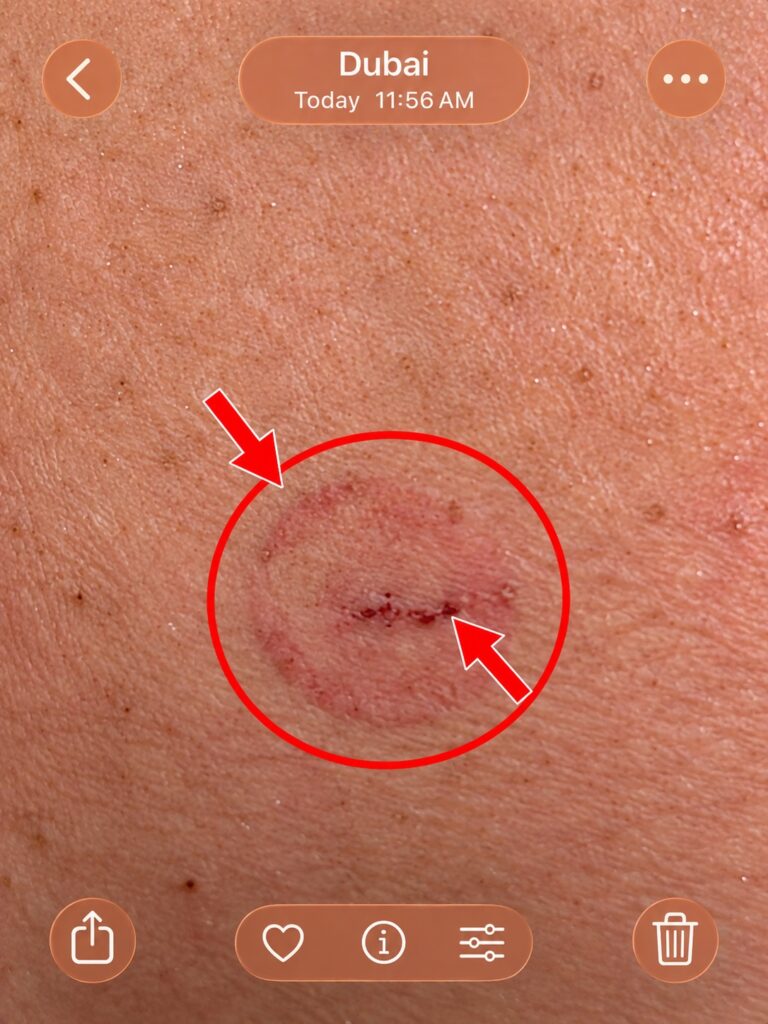
The camel bite broke the skin on my back and left a circular mark. I sought medical attention in Dubai and began a series of rabies vaccinations as a precaution.
After the camel bite in Dubai, I went to urgent care.
Medical staff examined the injury. Because the camel broke my skin, they directed me to a hospital for additional treatment.
Doctors started a rabies vaccination series as a precaution.
My treatment plan includes five doses. Today, I’m receiving my second shot.
That doesn’t mean the camel had rabies. I have no evidence that it did.
However, doctors take possible rabies exposure seriously because the disease can become fatal once symptoms develop.
Animal bites can also cause bacterial infections.
I certainly never expected to spend part of my Dubai vacation getting rabies vaccinations.
But I wasn’t about to take chances with my health.
Dubai law and the responsibility of animal handlers
One detail continues to bother me.
Earlier that day, I watched someone walking the camels along the beach. Yet when the bite happened, I couldn’t see a handler anywhere.
The animals appeared to be unattended.
Dubai has laws that place responsibilities on animal keepers.
Article 29 of Dubai Law No. 5 of 2025 addresses animal control and prohibits keepers from leaving animals unrestrained or astray.
I believe authorities should examine whether the handler followed the applicable rules.
Camels are large, powerful animals. Even a brief bite can cause a serious injury.
What if the camel had bitten a small child?
Tourists frequently stop to photograph camels. That makes proper supervision especially important in public areas.
My desert safari showed a very different approach to camel safety
Here’s something interesting.
Despite getting bitten on my first day in Dubai, I later went on a desert safari excursion.
And yes, I rode another camel!
However, I immediately noticed a major difference between the camels at the beach and those at the desert safari.
Every camel I saw during the organized safari had a protective mouth covering.
Handlers also supervised the animals during the camel rides.
The camels on the public beach had no mouth coverings. I also saw no handler nearby when the bite occurred.
The difference stood out to me.
Why did the desert safari operators use protective mouth coverings while the camels on the public beach had none?
I don’t know whether Dubai law requires those coverings in either setting. However, I saw firsthand how differently the two experiences operated.
My desert safari camel ride went smoothly. I enjoyed the excursion and continued exploring Dubai.
I don’t blame all camels for what happened.
But I do believe the people responsible for handling these animals should take reasonable precautions to protect tourists.
Filing a Dubai police report took hours
After seeking medical treatment, I decided to file a police report.
I wanted authorities to document the camel bite and examine the circumstances.
I waited nearly three hours for police to arrive.
Then I had to travel approximately another hour to provide an official statement.
By the time I finished, it was almost 11 p.m.
That was my first day in Dubai.
Instead of enjoying a relaxing evening, I spent hours dealing with medical appointments and police procedures.
I hope authorities review what happened and determine whether the animals had adequate supervision.
More importantly, I hope my experience helps prevent another tourist from getting hurt.
Why travel medical insurance matters
Exploring the Dubai desert was one of the highlights of my trip. But after medical emergencies in several countries, including a camel bite in Dubai, I’ve learned why travel medical insurance is so important.
I’ve traveled to many countries over the years. I’ve experienced beautiful destinations, incredible adventures and unforgettable moments.
I’ve also had more than my share of unexpected medical problems.
The camel bite in Dubai is only the latest.
These experiences have taught me why travelers should consider medical insurance before leaving the United States.
COVID-19 during a trip to Greece
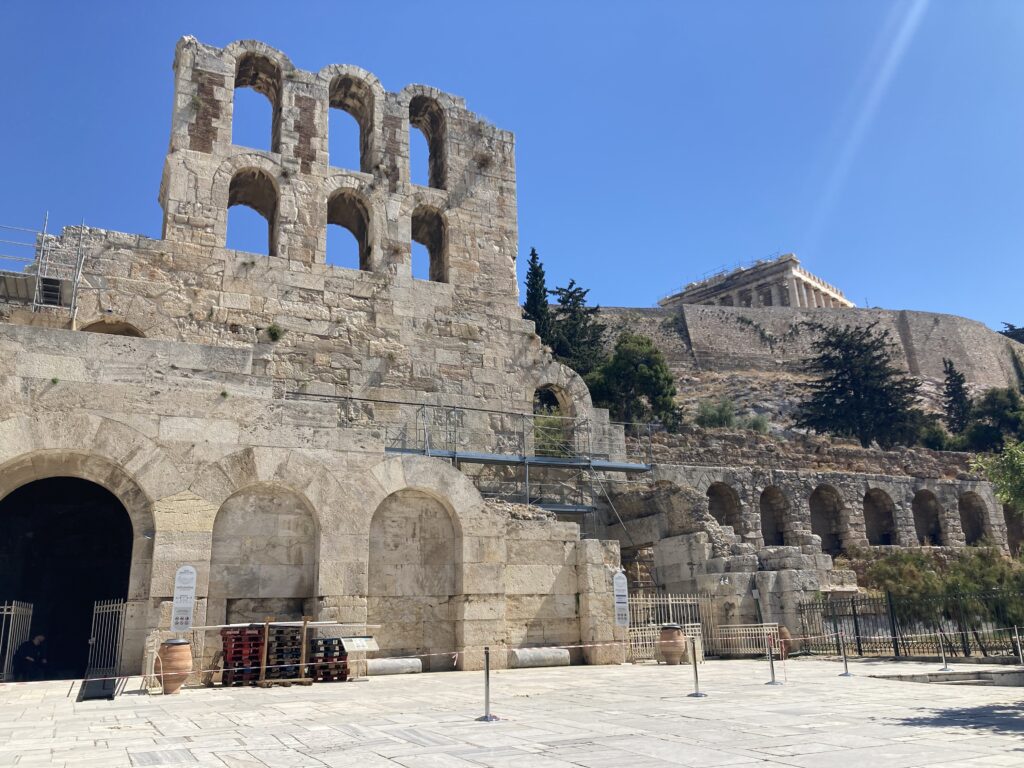
Exploring the historic sites of Athens, Greece, was unforgettable. Unfortunately, I also contracted COVID-19 during my vacation, another reminder of why travel medical insurance matters.
During one vacation in Greece, I contracted COVID-19.
Getting sick overseas creates challenges you might never consider at home.
You have to find medical care, manage your symptoms and determine whether you’re healthy enough to travel.
You may also face unexpected hotel expenses if an illness delays your return.
A scooter crash in Turks and Caicos
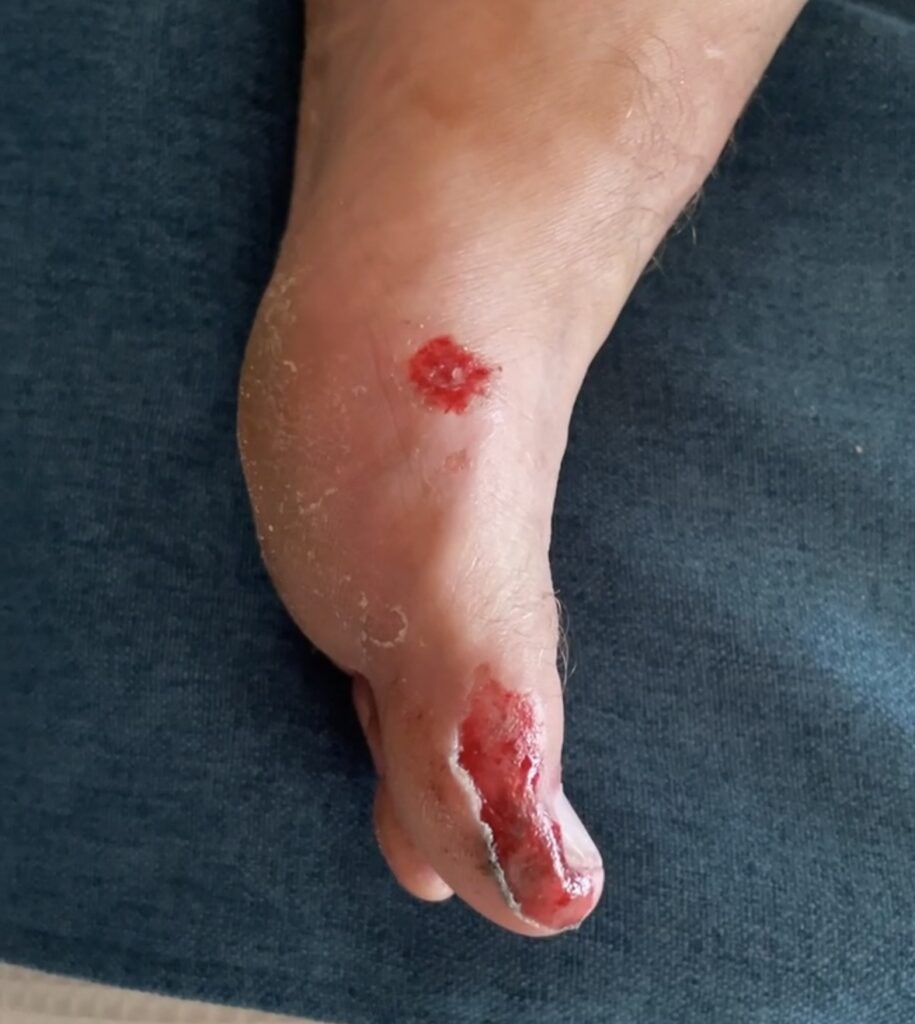
My partner was driving when we crashed a scooter during our vacation in Turks and Caicos. We both suffered injuries. His foot had painful cuts and abrasions, turning our island adventure into another reminder of why travel medical insurance matters.
On another vacation, my partner crashed a scooter in Turks and Caicos. We were both hurt.
What started as an adventure quickly became an accident.
Scooters can be a popular way to explore an island. However, even experienced travelers can suffer injuries.
An accident can also leave you facing unfamiliar medical systems and unexpected expenses.
A flesh-eating bacterial infection in Honduras
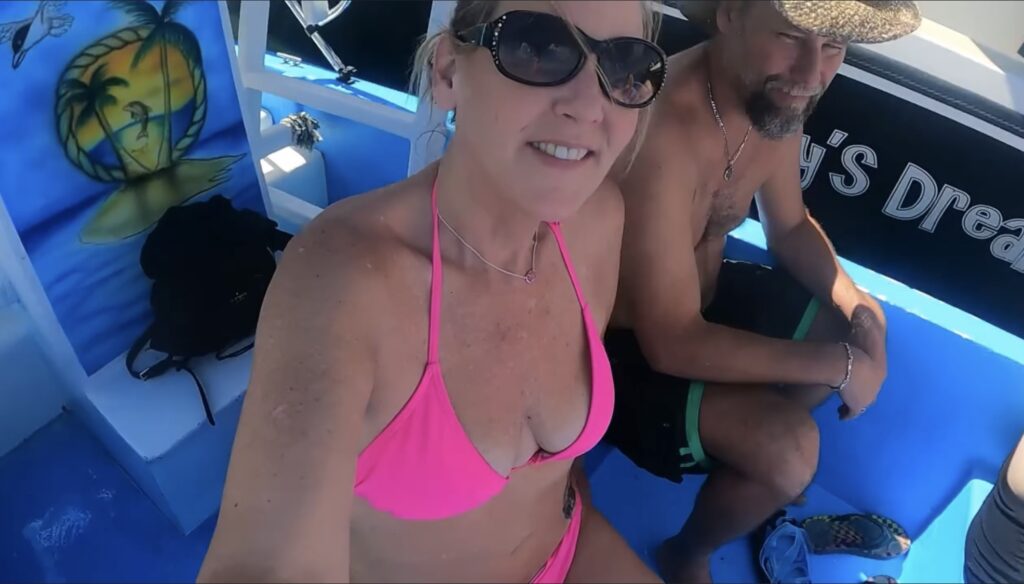
During a snorkeling trip in Honduras, I scraped my lower leg against coral. What seemed like a minor injury turned into a frightening experience when I developed a flesh-eating bacterial infection. Another reminder of why travel medical insurance matters.
One of my most frightening travel experiences happened while snorkeling in Honduras.
During the excursion, my leg struck coral and broke the skin. What started as a minor injury turned into a serious medical problem when I developed a flesh-eating bacterial infection.
I never imagined that brushing against coral while enjoying the beautiful underwater scenery could lead to such a frightening experience.
The infection required medical attention and taught me another important lesson about traveling. Even a small wound can become dangerous, especially when bacteria enter broken skin.
It’s another reason I believe travel medical insurance is so important.
Getting sick after jumping into a cenote in Mexico
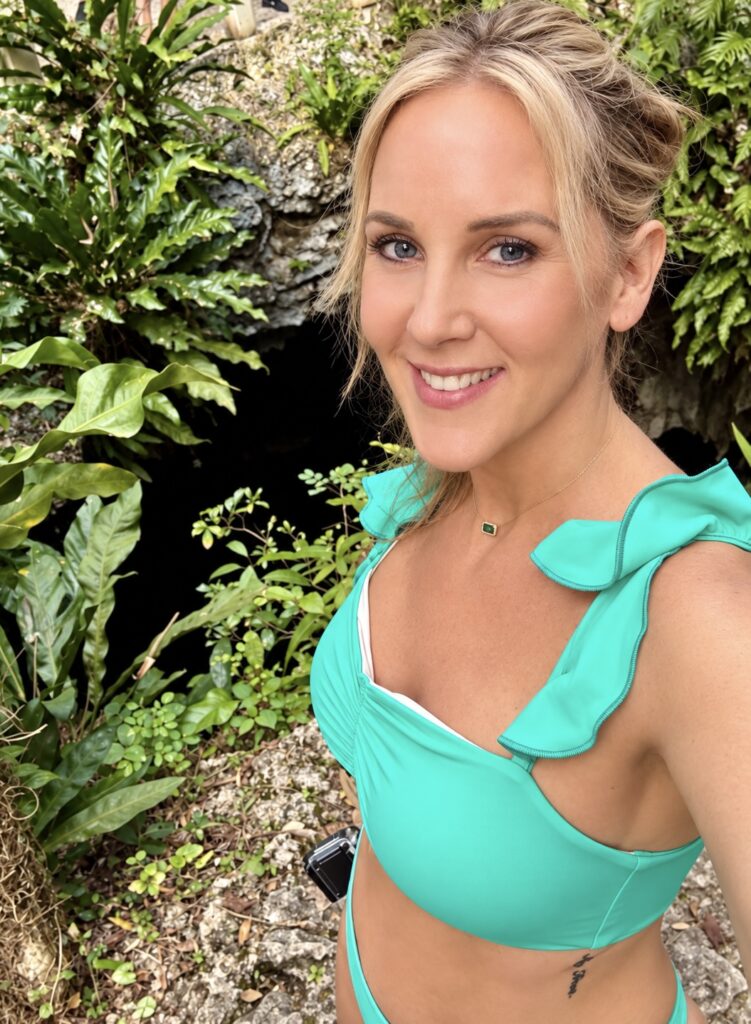
During my vacation in Mexico, I jumped into a beautiful cenote surrounded by lush tropical scenery. Unfortunately, I became sick afterward. Another unexpected travel experience that reminded me why medical insurance matters.
During a trip to Mexico, I jumped into a beautiful cenote.
These natural swimming holes attract visitors from around the world.
Unfortunately, I became sick afterward.
I can’t confirm whether the water caused my illness. However, the timing certainly made the experience memorable.
Between Greece, Turks and Caicos, Honduras, Mexico and now Dubai, I’ve collected quite a few unusual travel medical stories.
You really can’t make this stuff up.
What travel medical insurance may cover
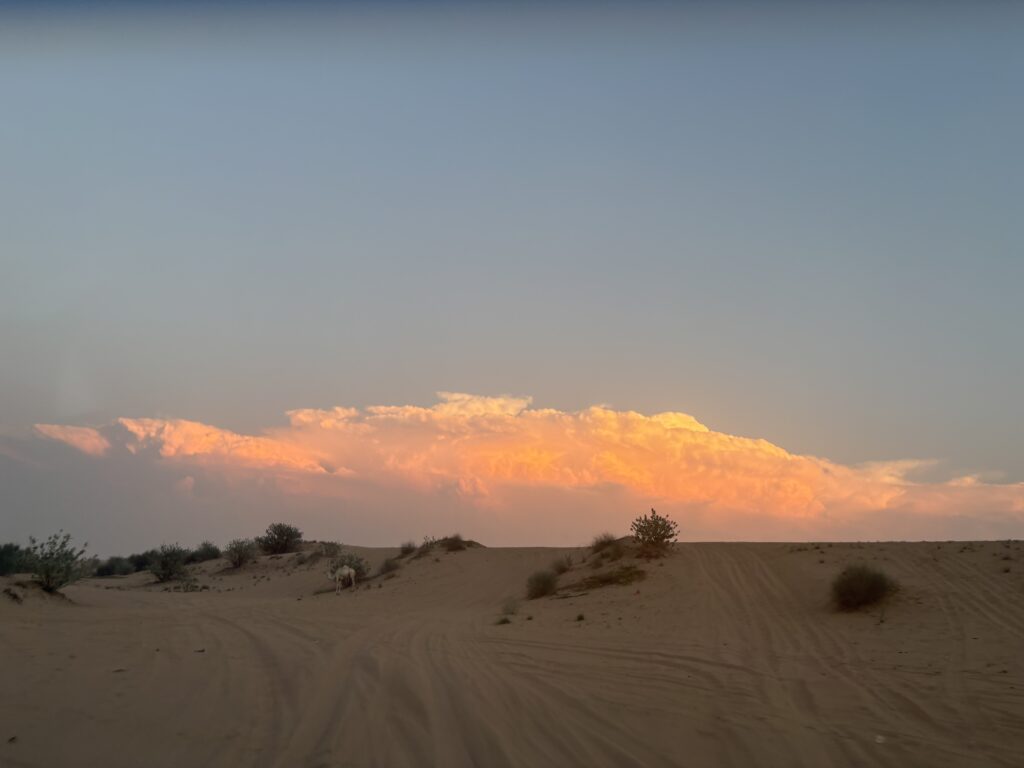
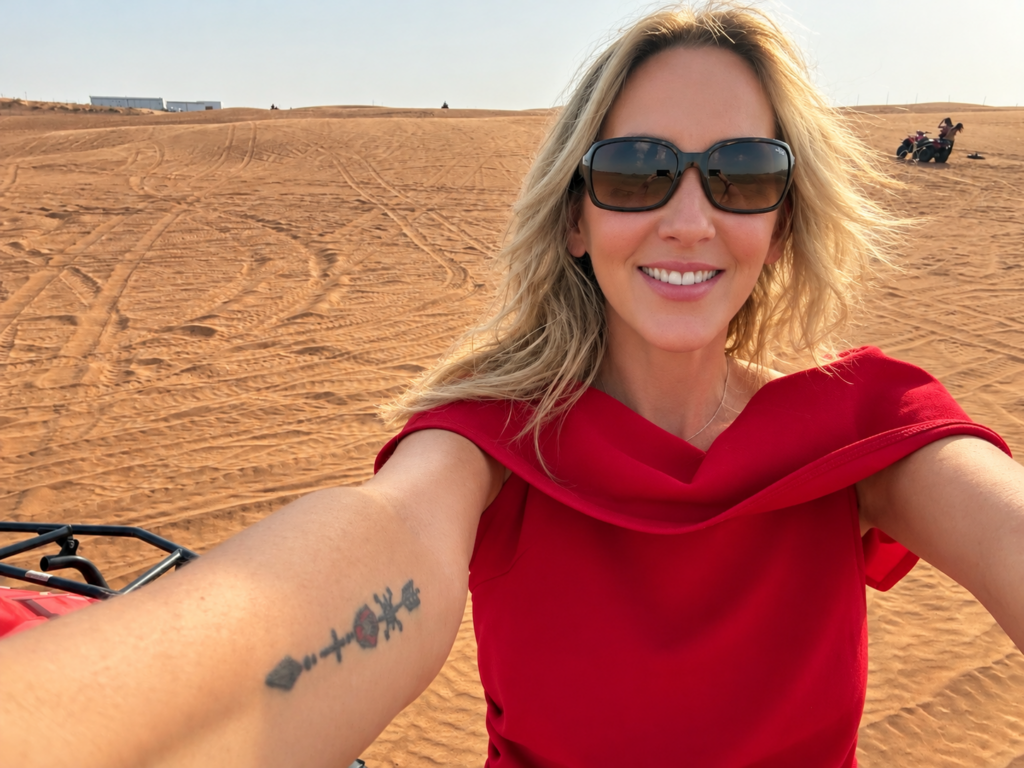
Chasing sunsets in the Dubai desert. My adventures have taken me around the world, but unexpected medical emergencies have taught me why travel medical insurance is essential.
Many people purchase travel insurance because they worry about canceled flights, lost luggage or missed connections.
But medical emergencies can become much more expensive.
Depending on the policy, travel medical insurance may help pay for:
Emergency doctor visits and hospital treatment
Prescription medications and medical testing
Emergency transportation and medical evacuation
Treatment following certain accidents or illnesses
Additional medical expenses covered under the policy
Some plans require you to pay upfront and submit a claim later.
Others may coordinate payment directly with a hospital.
Always review the coverage limits, deductibles and exclusions before purchasing a policy.
Pay special attention to adventure activities.
Scooter riding, diving, desert excursions and other recreational activities may require additional coverage.
Travel insurance policies vary. Don’t assume every medical emergency or activity qualifies for reimbursement.
What to do if an animal bites you overseas
Making new friends during my Dubai desert safari. Despite my camel bite and unexpected medical treatment, I continued exploring Dubai and enjoying unforgettable experiences.
My camel bite in Dubai taught me how quickly an ordinary vacation moment can turn into a medical emergency.
If an animal bites you while traveling, take the injury seriously.
Wash the wound thoroughly with soap and running water. Seek medical care promptly, even if the injury appears minor.
Ask a healthcare professional about infection, tetanus and rabies exposure.
Take photographs of the injury and document what happened.
Keep your medical records, receipts and any official incident reports.
Those documents may become important if you need additional treatment or file an insurance claim.
And remember, an animal doesn’t have to appear sick to cause a serious injury.
One camel bite won’t ruin my Dubai vacation
Despite everything, I refuse to let this incident ruin my trip.
Dubai is a beautiful destination. I’ve enjoyed exploring the city, visiting the beaches and experiencing the desert.
I even got back on a camel during my safari excursion.
But I certainly learned to pay closer attention to how people supervise animals around tourists.
Looking back at my international adventures, I have quite a collection of medical stories.
COVID-19 in Greece. A scooter crash in Turks and Caicos. A flesh-eating bacterial infection in Honduras. Getting sick after jumping into a cenote in Mexico.
And now, a camel bite in Dubai.
Some travelers collect souvenirs.
Apparently, I collect medical emergencies.
At least I have some incredible stories to tell.
My advice? Enjoy the adventure, take the photographs and explore the world. But consider buying travel medical insurance before you leave home.
You never know when your dream vacation might take an unexpected turn.
Have you ever experienced a medical emergency while traveling internationally? Did travel insurance help? Share your experience in the comments.
Follow Investigative Reporter Tammy Rose at chopperrose.com for more travel stories, firsthand experiences and investigative reporting.
My new book, When Two Worlds Collide During WWII, follows two families on opposite sides of World War II and the remarkable events that eventually brought their lives together in Wisconsin.
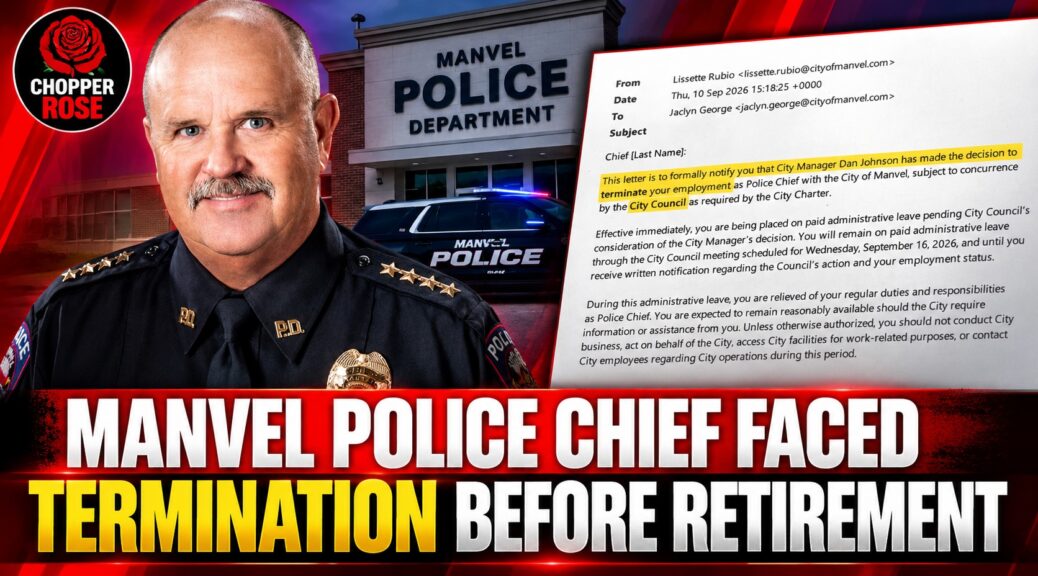
Exclusive: Toxic workplace allegations emerge in Manvel police chief retirement records
By Investigative Reporter Tammy Rose
Newly obtained records raise questions about the Manvel police chief retirement and the events that led to it.
The documents reveal allegations of retaliation, abuse of authority and a toxic work environment. They also include a proposed termination notice and a negotiated retirement agreement.
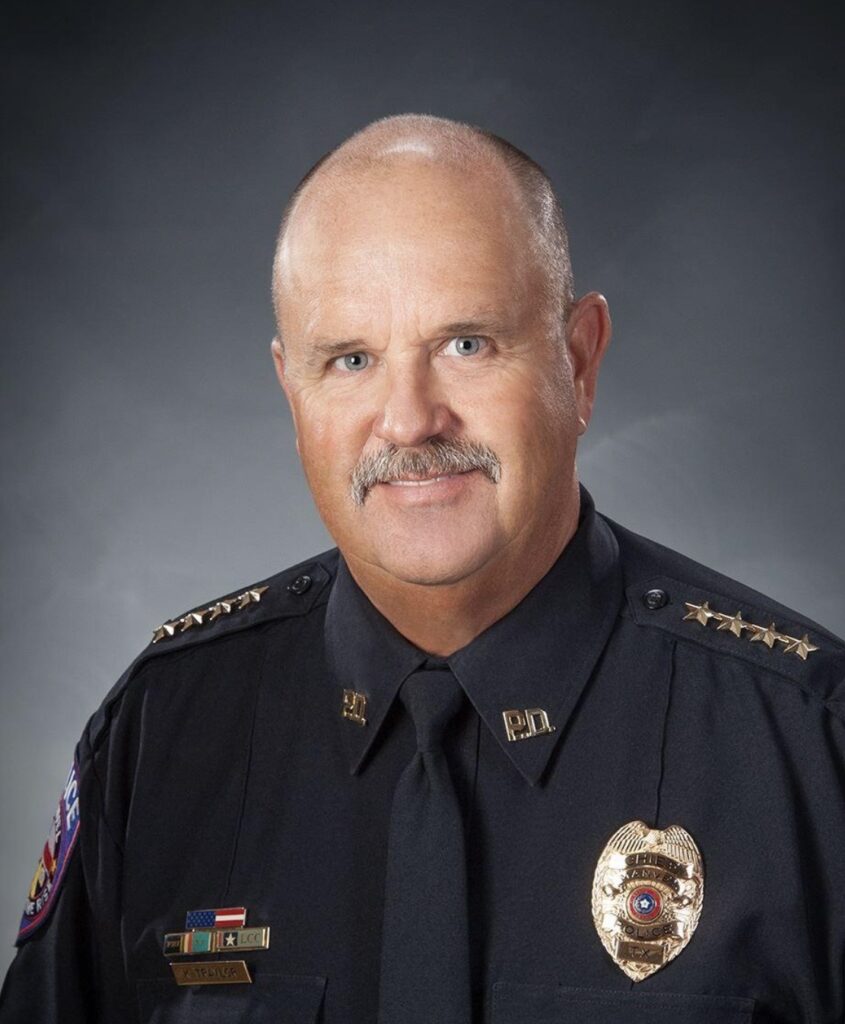
Former Police Chief Keith Traylor left the department on September 30, 2026.
However, the records suggest city officials considered another outcome before his departure.
Manvel police chief faced proposed termination
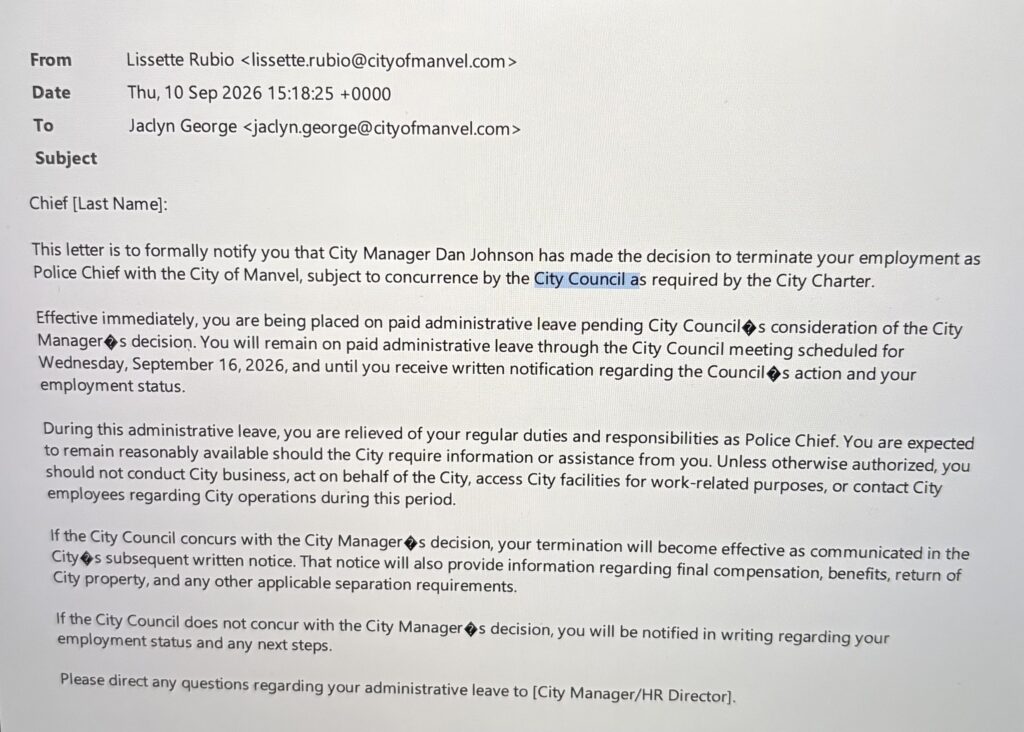
A proposed termination notice included in September 10, 2026, records outlined plans to remove Manvel Police Chief Keith Traylor, subject to City Council concurrence.
A September 10, 2026, email included a proposed termination notice for Traylor.
The notice stated that City Manager Dan Johnson had decided to terminate the chief, pending City Council approval.
The document also addressed administrative leave and the next steps if the council rejected the decision.
However, the records reviewed do not establish that the council approved his termination.
Instead, the city and Traylor reached a separation agreement.
The proposed termination notice followed a September 3, 2026, formal complaint filed by Chris Day, a former Manvel police employee and president of the Manvel Police Association.
Day alleged retaliation, abuse of authority and violations of department disciplinary procedures. He also questioned whether his own termination had been predetermined, pointing to a termination letter dated August 12, one day before his August 13 disciplinary meeting.
Day requested an independent investigation into Chief Keith Traylor’s conduct, including allegations of intimidation and a toxic workplace.
The complaint also raised concerns about a possible vote of no confidence in Traylor’s leadership.
These allegations have not been independently substantiated, and the complaint does not establish that Traylor violated department policy or state law.
Records reveal toxic workplace allegations
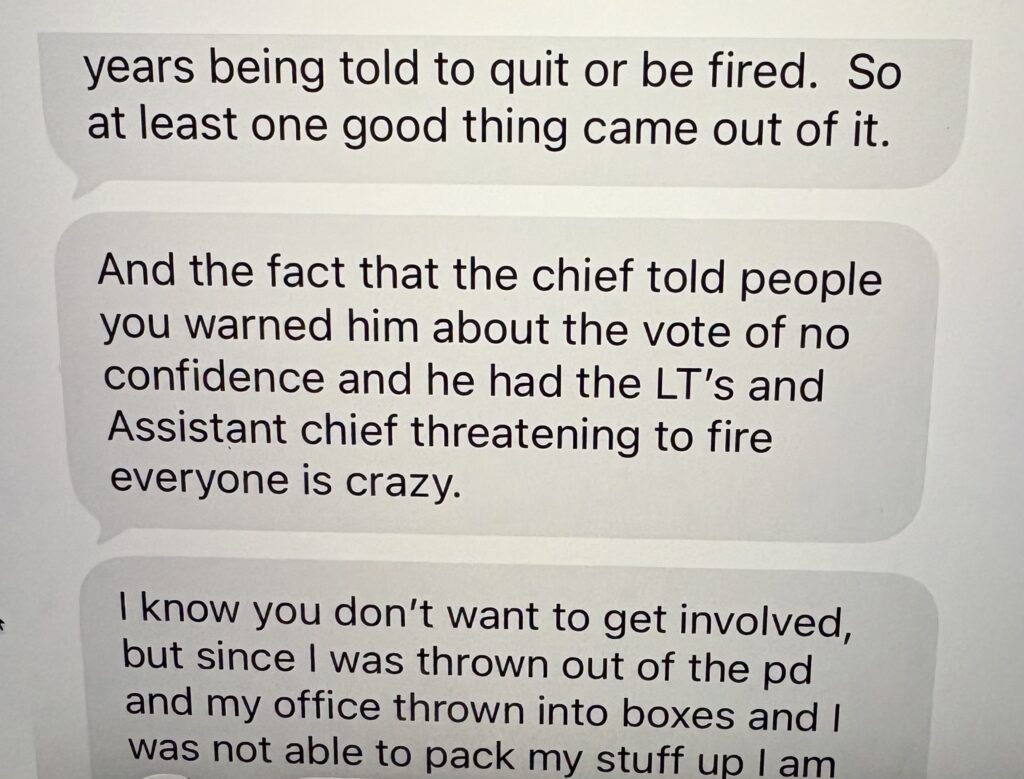
Text messages obtained through public records describe allegations of retaliation, threats of termination and a vote of no confidence involving Manvel Police Department leadership.
Additional documents describe serious disputes inside the Manvel Police Department.
A formal complaint alleges retaliation, abuse of authority and a toxic work environment.
Other records include messages from a former employee who claimed department leaders treated him unfairly.
He alleged that the chief retaliated against him after he filed a complaint. He also described threats of termination and ongoing workplace conflict.
The messages reference a vote of no confidence involving department leadership.
These claims remain allegations.
Source document: September 30, 2026, response from Mayor Dan Davis
The documents reviewed do not independently establish their accuracy.
Former officer questioned whether termination was predetermined
A September 3, 2026, formal complaint submitted by former Manvel police employee Chris Day raises additional questions about the disciplinary process under former Police Chief Keith Traylor.
Day alleged that his termination may have been predetermined, pointing to a termination letter dated August 12, one day before his August 13 disciplinary meeting.
He also alleged that he was not provided all investigative materials before his termination, received insufficient time to respond to disciplinary findings and was given approximately 45 minutes’ notice before an administrative interview.
Day, who identified himself as president of the Manvel Police Association, also raised concerns about possible retaliation. According to his complaint, association members had discussed a possible vote of no confidence in Traylor.
The complaint requested an independent investigation, preservation of relevant records and consideration of placing Traylor on paid administrative leave while the allegations were examined.
Day acknowledged that his termination appeal had been denied. His complaint sought a separate investigation into whether the disciplinary process had been handled properly.
These allegations have not been independently established by the complaint itself, and the records reviewed here do not establish that Traylor violated department policy or Texas law.
The separation agreement describes Traylor’s departure as a voluntary retirement in good standing.
The timing of the agreement raises additional questions. A proposed termination notice dated September 10, 2026, indicates City Manager Dan Johnson was considering terminating Traylor’s employment, pending City Council approval. Yet the signed separation agreement states that Traylor submitted his voluntary retirement notice that same day. The agreement ultimately characterized his departure as a voluntary retirement in good standing.
The records raise an important question: What happened between the proposed termination and the negotiated retirement agreement?
Section 3 addresses his personnel file, disciplinary records and employment references.
The agreement restricts the city from adding certain materials about inquiries to his personnel file or Texas Commission on Law Enforcement records.
It also requires the city to report his departure as a voluntary retirement.
Additionally, the agreement provides salary and accrued leave payments.
It includes continued health coverage under specified terms.
The city and Traylor agreed that the settlement did not constitute an admission of wrongdoing.
Mayor publicly praised Traylor
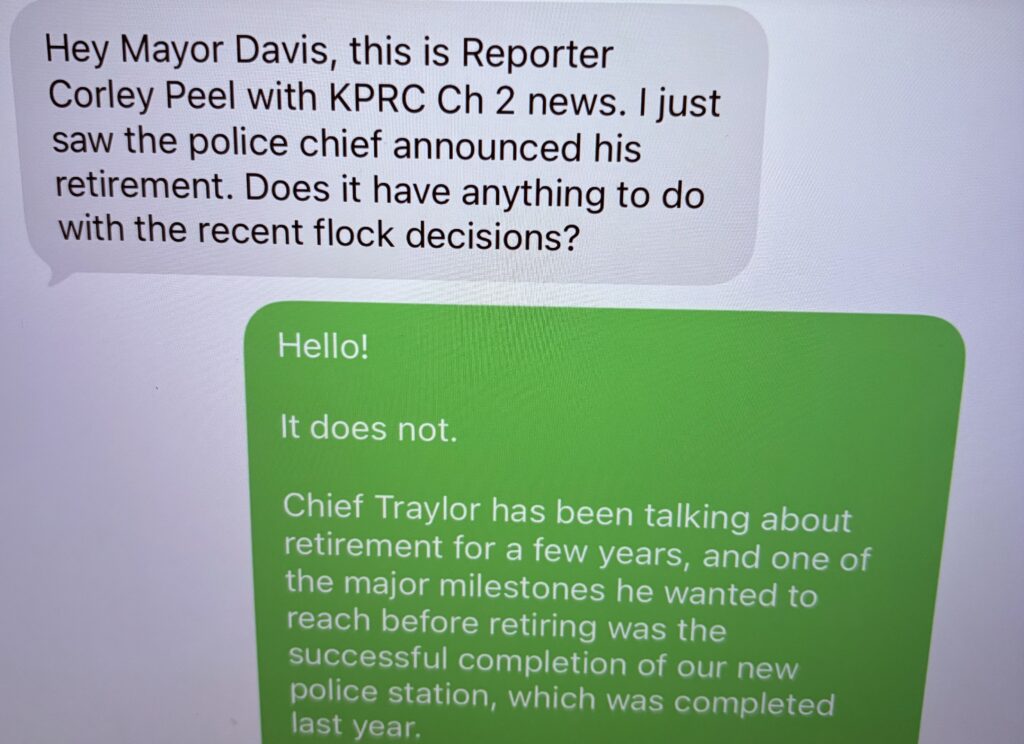
Text messages obtained through public records show KPRC 2 reporter Corley Peel questioning Manvel Mayor Dan Davis about Police Chief Keith Traylor’s retirement. Davis denied a connection to recent Flock camera decisions and said Traylor had discussed retirement for years. Photo credit: City of Manvel public records, September 2026.
On September 16, a KPRC reporter asked Manvel Mayor Dan Davis about the retirement.
Davis said Traylor had discussed retirement for several years.
He also praised the chief’s leadership and service to the city.
However, the proposed termination notice raises questions about what city officials discussed before the retirement agreement.
Questions remain about Manvel police leadership
The records reveal a department facing workplace allegations and internal disputes.
They also document a proposed termination and a later agreement that characterized Traylor’s departure as voluntary.
Several questions remain.
What prompted the proposed termination? How did city officials investigate the workplace complaints? What led to the final retirement agreement?
The documents reviewed do not fully answer those questions.
Investigative Reporter Tammy Rose continues to examine the records surrounding Traylor’s departure.
My new book, When Two Worlds Collide During WWII, follows two families on opposite sides of World War II and the remarkable events that eventually brought their lives together in Wisconsin.
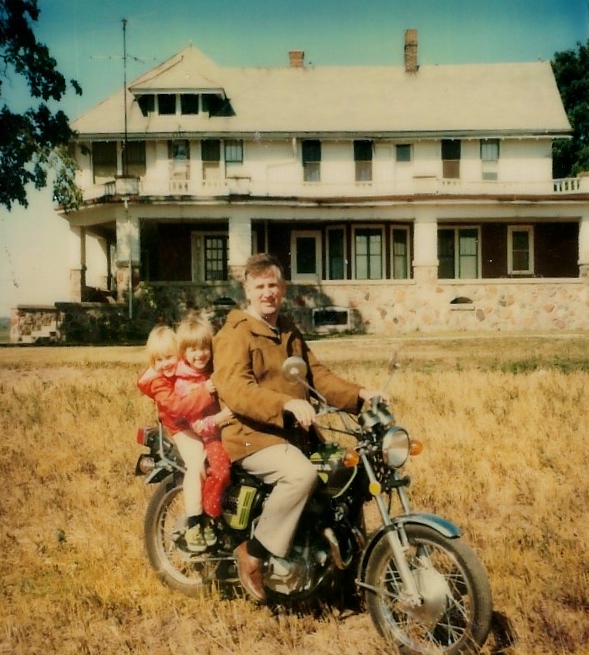
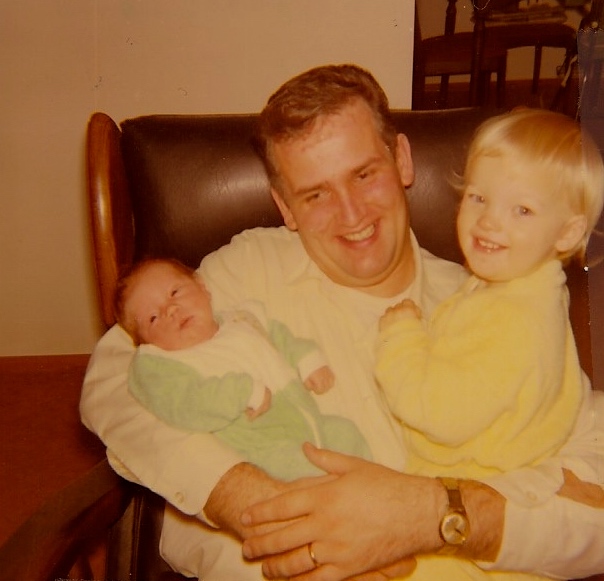
My dad introduced me to adventure long before I started traveling the world. His love of exploring new places continues to inspire me today.
Tomorrow, I board a plane to Dubai. It’s a trip I’ve wanted to take for years.
But this adventure means more to me than visiting another country.
It reminds me of my dad.
He introduced me to the world of travel when I was young. Now, as I begin a new chapter, I want to honor that gift.
How my dad inspired my love of travel
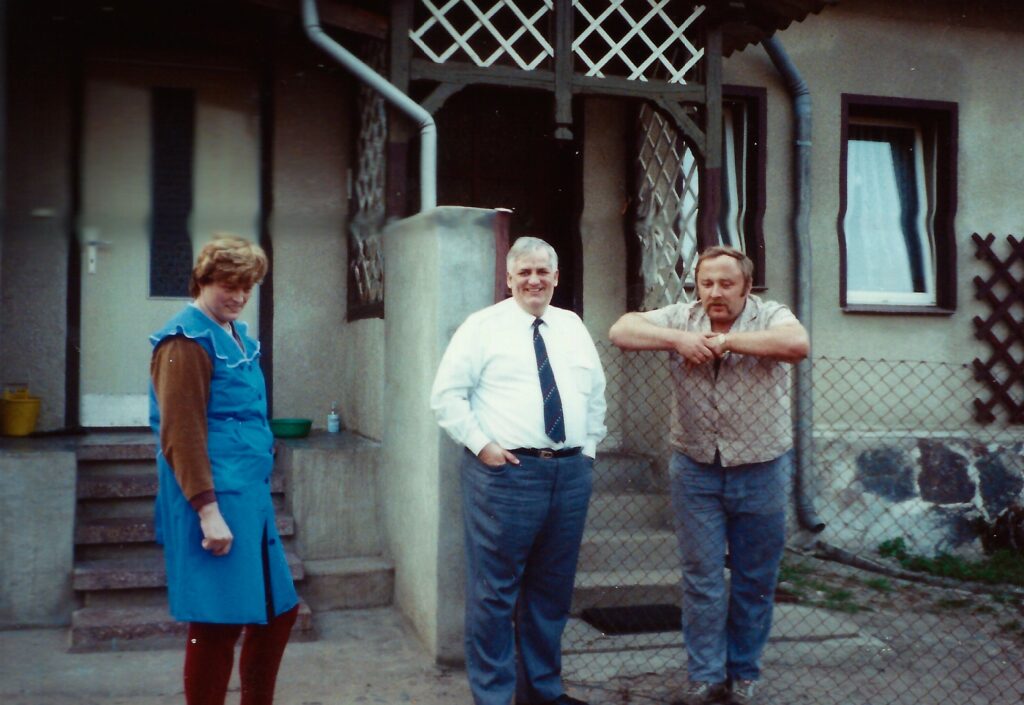
Berlin, Germany, 1991. I took this photo of my dad during a trip we shared. Looking back, I realize how much those early adventures inspired my lifelong love of travel.
My dad owned a travel agency when I was growing up in Wisconsin.
He loved discovering new places. He also loved sharing that excitement with others.
Because of him, I dreamed about seeing the world.
I imagined visiting distant countries, meeting new people and exploring different cultures.
However, life took me in another direction.
After high school, I pursued a career in broadcasting. That decision changed my life.
Thirty years of telling other people’s stories
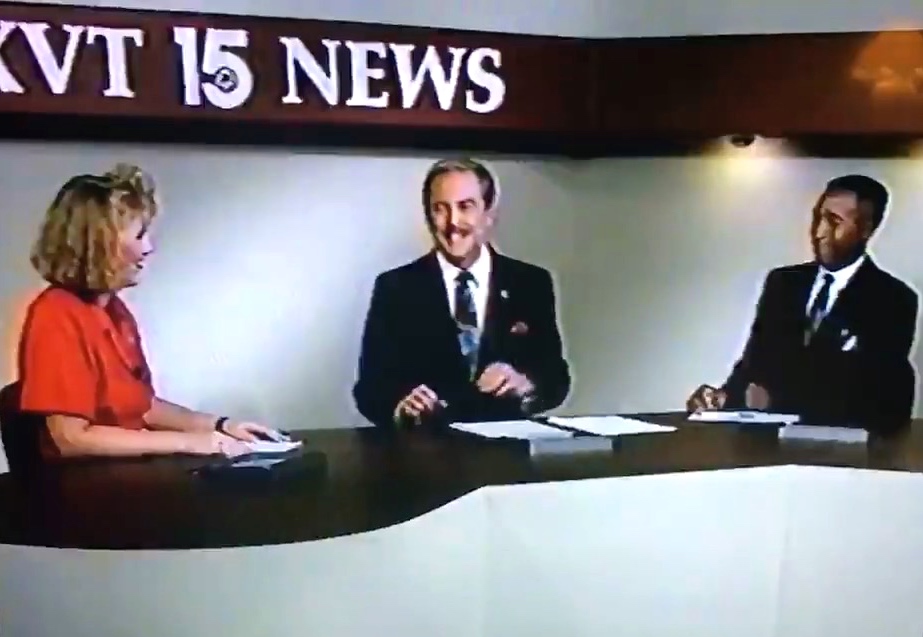
My early broadcasting days at WXVT 15 News in Greenville, Mississippi, where I served as the main weather anchor. Journalism became my career, but my love of travel never faded.
For more than 30 years, journalism became my world.
I covered breaking news, investigated crimes and shared stories that mattered.
Eventually, my career brought me to Houston.
For nine years, I reported from a helicopter above the city.
I watched beautiful sunrises and sunsets from thousands of feet in the air.
I loved those moments.
Still, the demanding schedule left little time for travel.
I spent years telling other people’s stories. Meanwhile, I kept putting my own adventures on hold.
The trips my dad never got to take
The breathtaking Whitsunday Islands in Australia, 2024. I visited on my dad’s birthday to honor his dream of seeing Australia. He never made it there, but I carried his love of travel with me.
My dad passed away in 2018.
Even today, I think about the places he wanted to visit,.
Australia was on his bucket list. So, in 2024, I traveled there on his birthday.
It was my way of honoring him and experiencing a place he had always dreamed of seeing.
I wish we could have shared more adventures together.
But I can’t change the past.
Instead, I can carry his love of travel into my future.
That’s what makes this next chapter so meaningful.
Why I’m traveling to Dubai
On October 13, I’m leaving Houston for Dubai.
I’ll explore a city I’ve never visited. I also plan to experience the desert, enjoy the water and discover a new culture.
Most importantly, I’ll finally give myself time to explore.
After years of early mornings and breaking news, that feels exciting.
Of course, I still love journalism.
I’m not retiring from telling stories.
Instead, I’m stepping away from daily helicopter reporting. I’ll continue my investigative work, true crime coverage and independent reporting.
Now, I’ll also share my travels.
A new chapter, inspired by my dad
As I prepare for Dubai, I keep thinking about my dad.
He showed me that the world offers endless possibilities.
I just needed to make time to explore them.
I wish he could join me on this trip.
But in many ways, he’s coming along.
His love of travel started this dream.
And now, I’m finally following it.
Sometimes the greatest adventure isn’t about where you’re going. It’s about remembering who inspired you to go.
Follow my journey here on ChopperRose.com and on my YouTube channel, Tammy Rose Reports.
My new book, When Two Worlds Collide During WWII, follows two families on opposite sides of World War II and the remarkable events that eventually brought their lives together in Wisconsin.
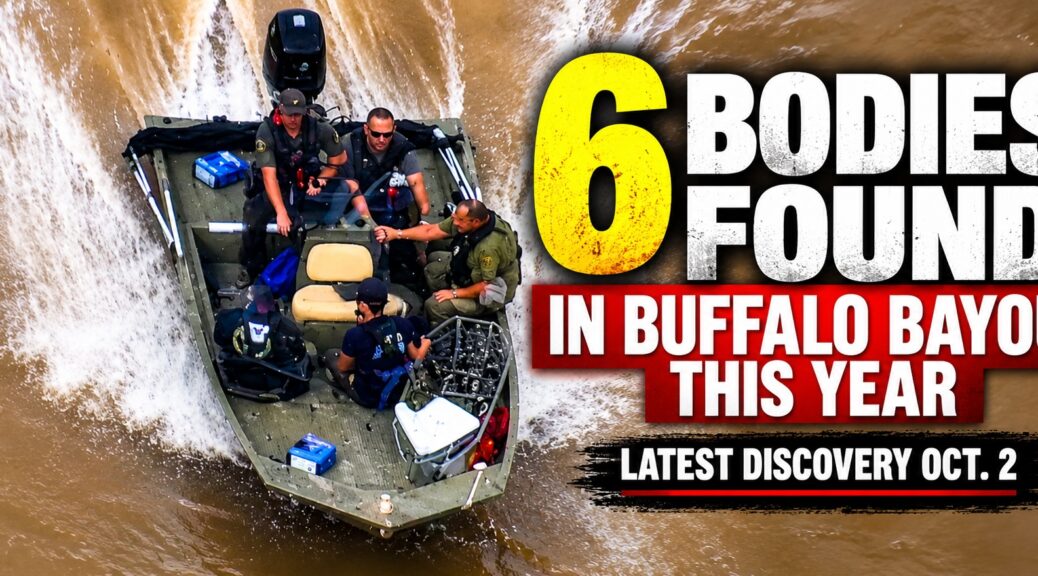
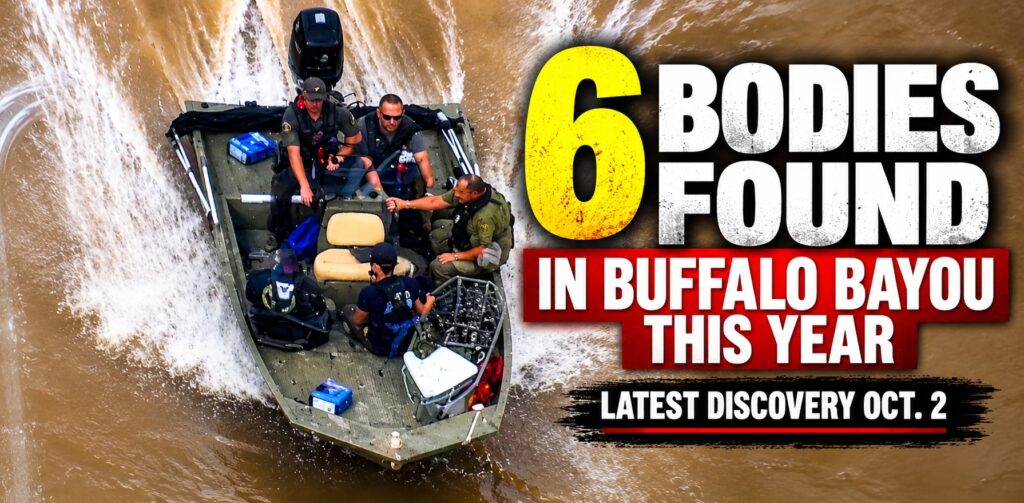
At least six bodies have been recovered from Buffalo Bayou or its banks in 2026. The latest discovery happened Oct. 2.
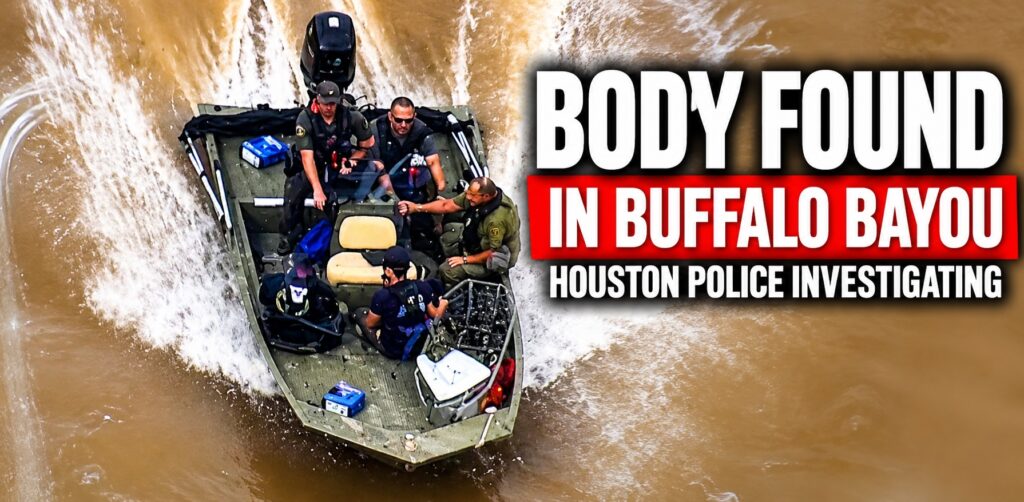
Another body found in Buffalo Bayou is raising questions in Houston.
Houston police are investigating after firefighters recovered a man’s body from Buffalo Bayou Friday morning, October 2. The discovery happened near Hirsch Road and Clinton Drive in east Houston.
It is at least the sixth documented body recovered from Buffalo Bayou or its banks in 2026.
The cases stretch from downtown Houston to the Houston Ship Channel. Some victims have been identified. Other cases still have unanswered questions.
Man found in Buffalo Bayou on October 2
The latest discovery happened Friday morning.
Houston firefighters responded after someone spotted a body floating in Buffalo Bayou. Crews launched a rescue boat near the 7300 block of Clinton Drive.
Firefighters recovered the body of a man.
Houston police homicide detectives are investigating. Authorities have not released the man’s name or age.
The Harris County Institute of Forensic Sciences will determine his cause and manner of death.
January 6: First Buffalo Bayou body of 2026
The first reported Buffalo Bayou recovery of the year happened January 6 near downtown Houston.
A maintenance crew spotted a man’s body in the water near Commerce and Main streets.
Houston firefighters received the call around 1:46 p.m.
Police said the man was clothed and wearing a gray jacket. Authorities did not immediately release his identity.
The discovery came just days into the new year.
February 2: Fisherman found near Port of Houston
Houston police recovered another man from Buffalo Bayou on February 2.
The discovery happened at 8300 High Level Road near the Port of Houston.
HPD said the 62-year-old man wore several layers of clothing and appeared dressed for cold-weather fishing.
Detectives learned that a missing man had last been seen fishing at the same location on January 26. Investigators also found his vehicle and fishing equipment along the shore.
Police reported no obvious signs of foul play.
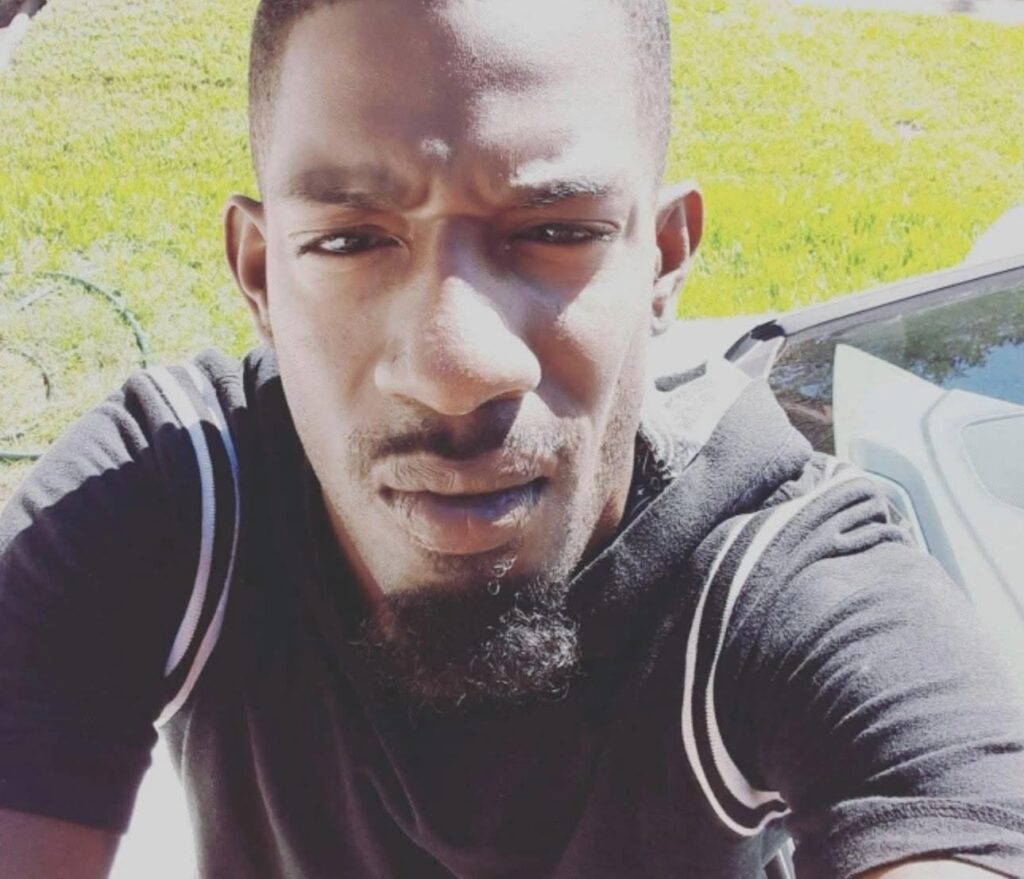
April 30: Kenneth Young found near Buffalo Bend Nature Park
Kenneth Young, 33, was found dead near Buffalo Bend Nature Park along Buffalo Bayou on April 30, 2026. Photo courtesy of Young’s family.
A cleanup crew found another body along Buffalo Bayou on April 30.
The crew spotted the badly decomposed body near Sgt. Macario Garcia Drive and Buffalo Bend Nature Park.
Authorities later identified the man as 33-year-old Kenneth Young.
Authorities identified Young through his fingerprints.
His family has continued searching for answers about what happened to him.
July 20: Workers find decomposed body near J.W. Peavy Drive
Workers made another discovery on July 20.
They found a man’s decomposed body along the banks of the Buffalo Bayou Ship Channel at 7220 J.W. Peavy Drive.
Houston firefighters pronounced the man dead at the scene.
HPD said investigators found no apparent wounds or trauma.
At the time of the initial investigation, authorities were waiting for an autopsy to determine the man’s cause of death.
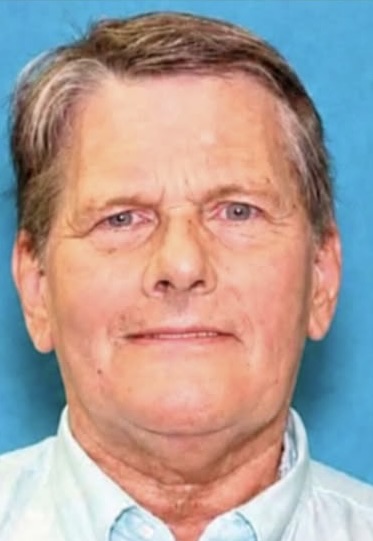
August 11: Body later identified as Carl “Clint” Mueller
Carl “Clint” Mueller, 73, was found dead along Buffalo Bayou near Nance Street on Aug. 11, 2026. Photo courtesy of Texas EquuSearch.
Houston police responded to another Buffalo Bayou discovery on August 11.
Officers found a man’s body along the banks of the bayou in the 2200 block of Nance Street.
The body was in an advanced state of decomposition.
HPD reported no obvious signs of trauma.
Texas EquuSearch later identified the man as 73-year-old Carl “Clint” Mueller.
Mueller had been missing since July 30. He was last seen near the 1400 block of Saint Joseph Parkway in downtown Houston.
Another August case happened near Buffalo Bayou
Police also investigated a body found August 7 in a wooded area near Buffalo Bayou and Beltway 8.
Officers responded to the 10400 block of Deerwood Road.
Police said that investigators were handling that death as a suicide.
Because the body was found in a wooded area near the bayou, rather than confirmed in Buffalo Bayou or along its banks, it is not included in the six confirmed Buffalo Bayou recoveries listed here.
Bodies have also been recovered from other waterways across Houston and Harris County in recent years.
Those deaths do not all share the same circumstances.
Some involved accidents or medical issues. Others involved drugs, drowning, suicide or violence. In some cases, investigators could not immediately determine how the person died.
That distinction matters.
Finding several bodies in Houston’s bayous does not mean the deaths are connected.
More than 200 bodies recovered from Houston-area bayous
More than 200 bodies have been recovered from Houston-area bayous since 2017, according to Harris County medical examiner records.
The Buffalo Bayou cases are part of a much larger issue across Houston.
Records from the Harris County Medical Examiner’s Office show that more than 200 bodies have been recovered from Houston-area bayous since 2017. By February 2026, the documented total had already reached 208.
The cases involve several Houston-area waterways, not just Buffalo Bayou. Causes of death have varied widely. Drowning has been the leading cause, while other deaths involved drugs, injuries or other circumstances. Some cases remain undetermined.
Authorities have also pushed back against speculation that the deaths are connected or the work of a serial killer.
What happens next?
The October 2 case remains under investigation.
Houston police have not announced the man’s identity or cause of death.
The Harris County Institute of Forensic Sciences will conduct the examination.
For now, Friday’s discovery adds another case to a troubling list of deaths involving Buffalo Bayou in 2026.
Investigative Reporter Tammy Rose will continue following the case as authorities release new information.
My new book, When Two Worlds Collide During WWII, follows two families on opposite sides of World War II and the remarkable events that eventually brought their lives together in Wisconsin.
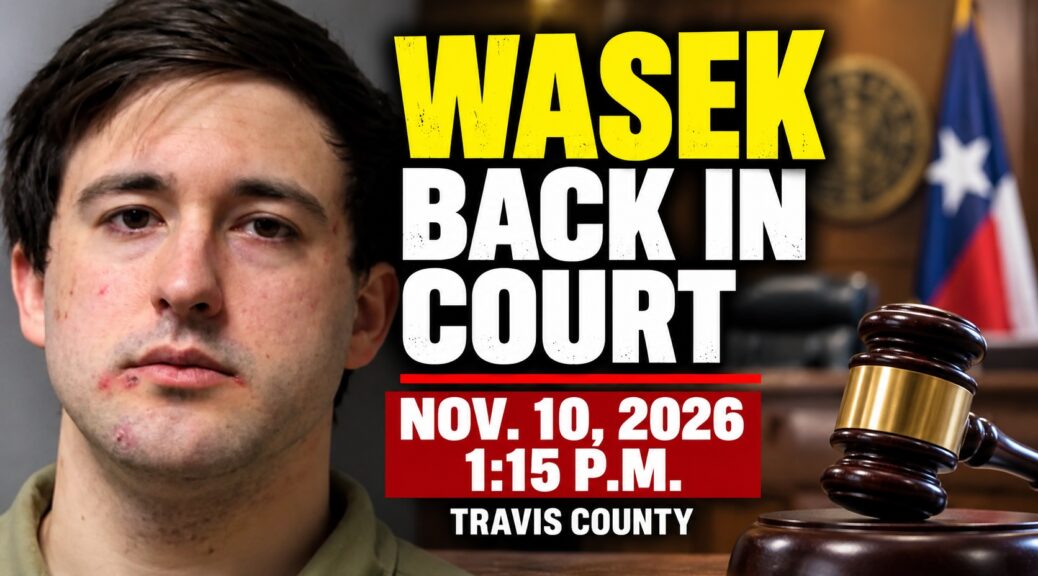
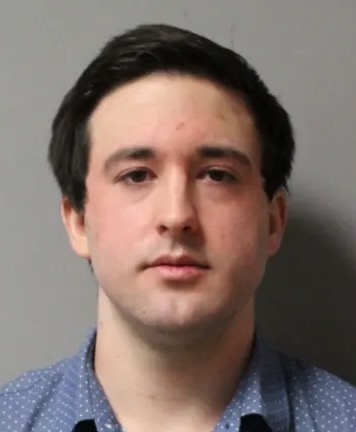
Mitchell Wasek has another court date in Travis County.
Court records show Wasek will return to the 167th District Court on Nov. 10, 2026, at 1:15 p.m.
The hearing involves several criminal cases that I have followed for years.
One of Wasek’s original 2023 cases lists a writ hearing. His separate 2025 case lists a pretrial hearing at the same time.
The Nov. 10 setting is not a trial date.
Wasek’s original cases remain in court
Wasek faces six invasive visual recording cases filed in 2023.
Those cases carry cause numbers D-1-DC-23-500314 through D-1-DC-23-500319. Travis County previously listed all six for writ hearings in the 167th District Court.
The latest Odyssey record I reviewed on Oct. 2 shows a Nov. 10 writ hearing in case D-1-DC-23-500314.
The older cases have also gone through appellate proceedings.
Separate 2025 case heads to pretrial hearing
Wasek also faces a separate felony case filed in 2025.
That case carries cause number D-1-DC-25-500122.
The Travis County docket lists the 2025 charge as possession of child pornography.
The latest Odyssey record shows a pretrial hearing on Nov. 10 at 1:15 p.m.
The newer case and at least one of Wasek’s original cases now have hearings set for the same date and time.
Defense wants evidence suppressed
The 2025 case includes two major defense challenges.
Wasek’s attorneys filed a motion to suppress on April 14.
The docket describes it as a motion to suppress evidence obtained by theft and breach of computer security.
The public docket I reviewed does not show an order resolving that motion.
Defense also seeks dismissal
Wasek’s attorneys filed another motion on June 2.
That motion asks the judge to dismiss the indictment due to an expired statute of limitations.
The filing does not mean the court has dismissed the indictment.
The public docket I reviewed does not show an order granting that request.
Court records also show several subpoena applications filed in June.
What happens next in the Mitchell Wasek cases?
Mitchell Wasek faces felony charges in Travis County as his defense seeks to suppress evidence and dismiss the indictment.
The Nov. 10 hearings could provide answers about the pending legal challenges.
The 167th District Court handles felony criminal cases in Travis County. Judge Dayna Blazey presides over the court.
For now, Wasek’s cases remain pending.
I will continue reviewing the court records and report any new rulings before the Nov. 10 hearings.
My new book, When Two Worlds Collide During WWII, follows two families on opposite sides of World War II and the remarkable events that eventually brought their lives together in Wisconsin.
The story is based on my own family history, with real people, family photographs and stories passed down through generations.
Disclosure: As an Amazon Associate, I earn from qualifying purchases.
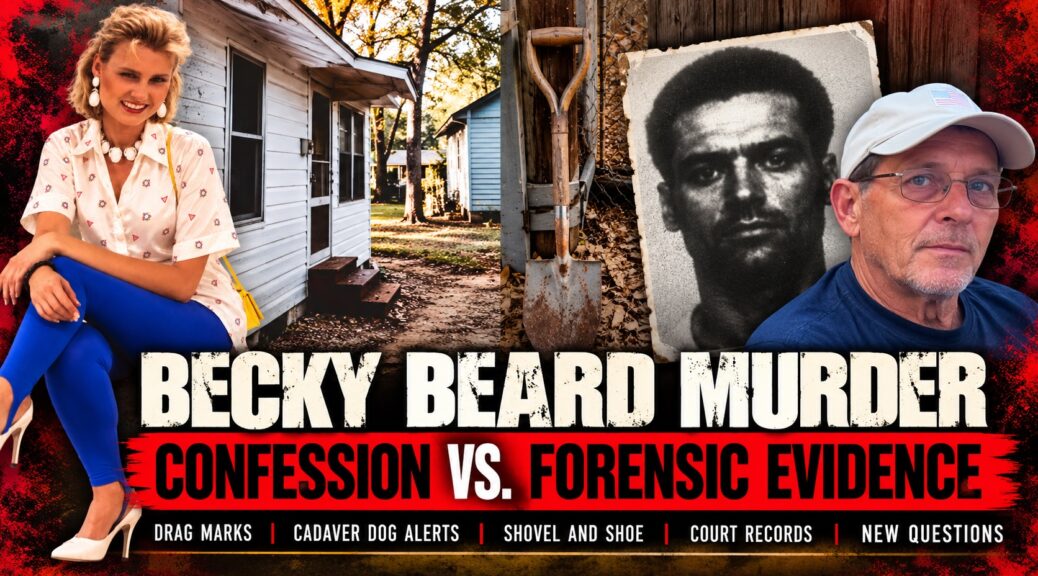
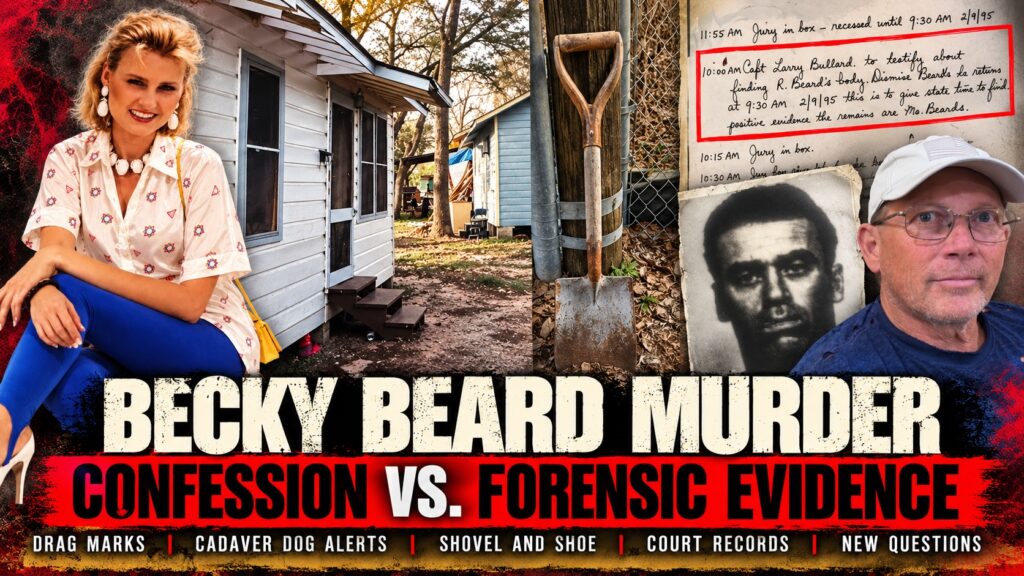
Paul Taylor’s confession vs. forensic evidence. An exclusive investigation reveals new questions about drag marks, cadaver dog alerts, a shovel found beneath the house and court records referencing Becky Beard’s remains.
Did Paul Taylor tell investigators everything about what happened to Rebecca “Becky” Beard?
Nearly 40 years after the 22-year-old disappeared from Freeport, Texas, new questions surround her murder.
A comparison of Taylor’s confession and previously undisclosed investigative findings reveals significant differences.
In my exclusive interview, retired Freeport police captain Richard Miller described apparent blood evidence and drag marks inside a home linked to Becky’s murder.
Two cadaver dogs also alerted beneath the property.
Miller began digging and discovered unidentified white material. However, officials ordered him to stop before he could identify it.
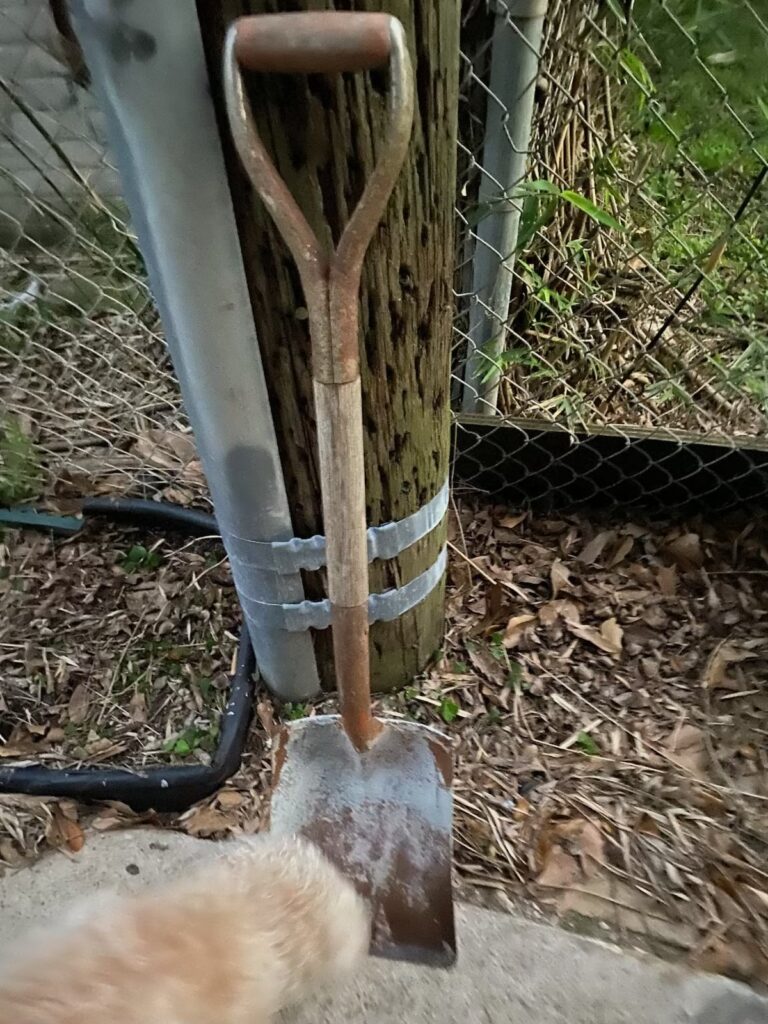
Becky’s mother, Linda Barnes, also found a shovel and shoe beneath the house. According to the family, investigators never entered either item into evidence.
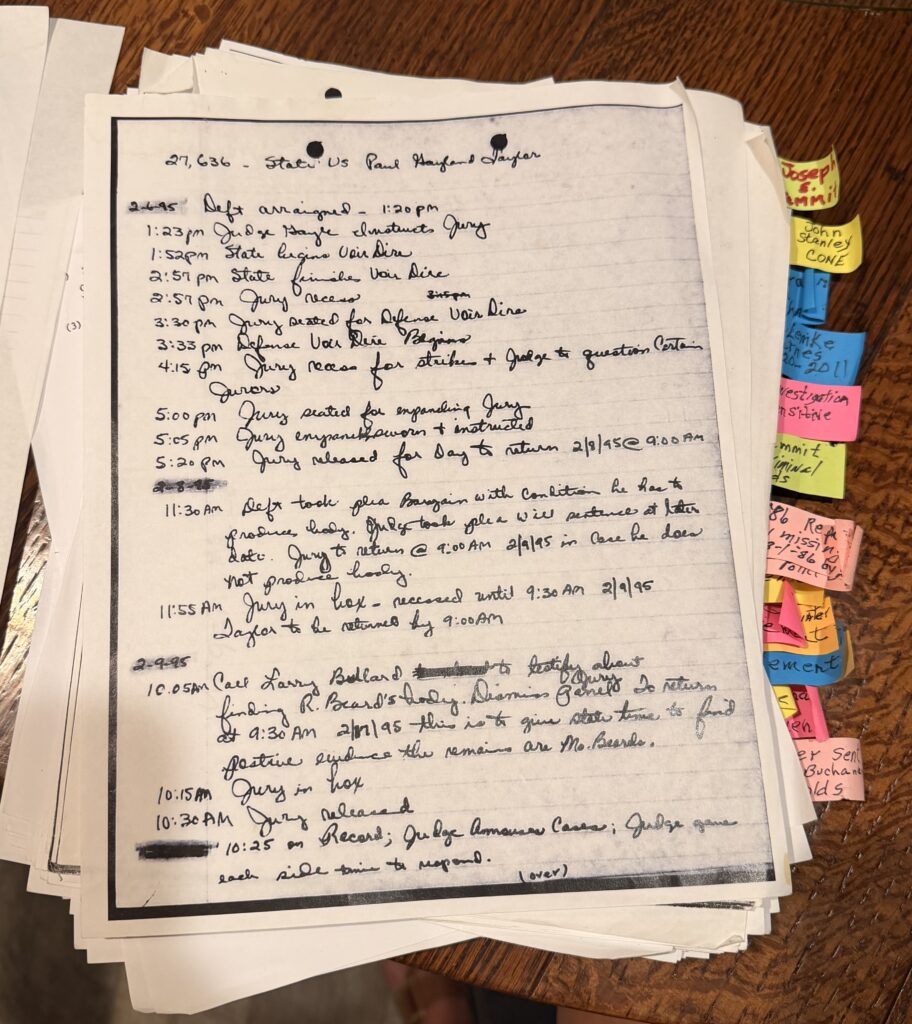
Newly uncovered court records raise even more questions. They reference Becky’s body and a Remington shotgun after Taylor’s guilty plea.
What really happened inside that house? And where are Becky’s remains?
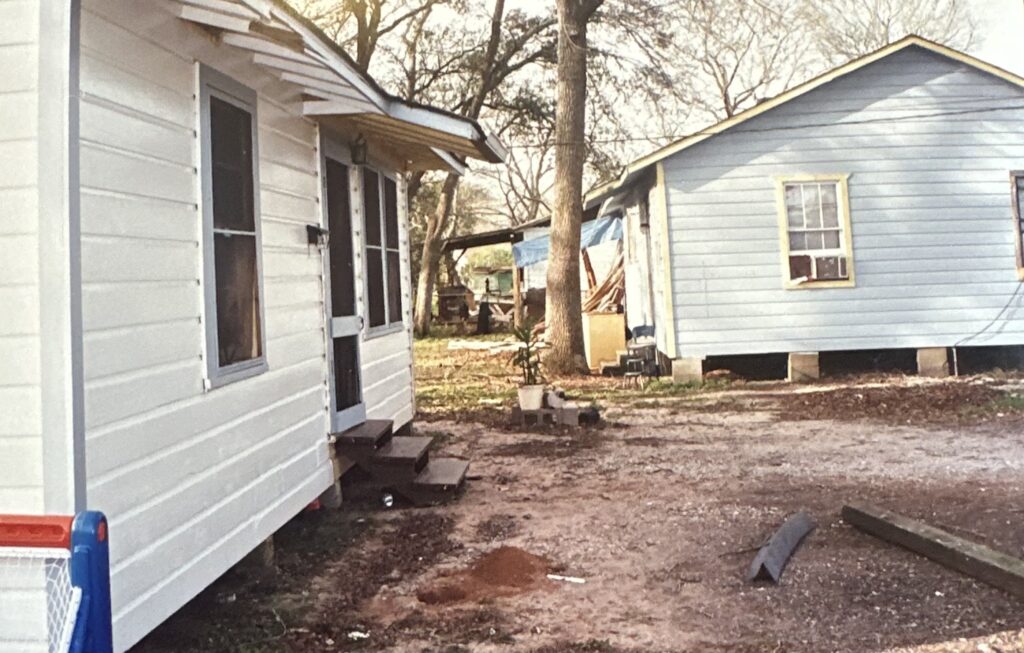
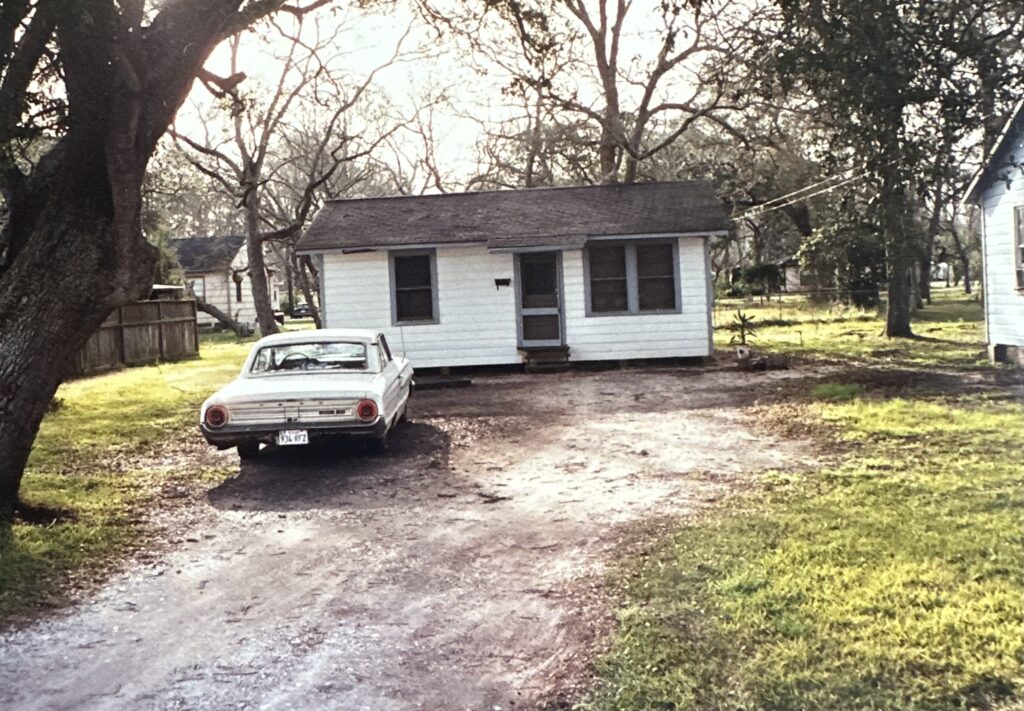
The home linked to Becky Beard’s murder. Retired Freeport police captain Richard Miller says investigators found apparent blood evidence and drag marks inside. Two cadaver dogs also alerted beneath the property.
What Paul Taylor said happened to Becky Beard
Becky disappeared after visiting the Excalibur Club in Freeport on March 1, 1986.
Taylor admitted that Becky left the club with him. He said they drove to his home, where an argument eventually turned violent.
During a recorded interview with Becky’s mother, Taylor claimed an argument over cocaine led to the shooting.
He said he had promised to obtain cocaine but could not reach his supplier.
According to Taylor, Becky became angry and threatened to call police.
Taylor admitted that he grabbed a gun and tried to frighten her.
He then told Linda that he shot Becky between the eyes.
Taylor claimed Becky died immediately.
He later pleaded guilty to her murder in 1995. However, investigators never recovered her body.
Forensic evidence reveals apparent drag marks inside the home
The home linked to Becky Beard’s murder. Retired Freeport police captain Richard Miller says investigators found apparent blood evidence and drag marks inside. Two cadaver dogs also alerted beneath the property.
Taylor described wrapping Becky’s body in bedsheets before placing her in his car.
However, Miller’s account raises questions about how someone moved her body.
During his investigation around 1994, Miller returned to the home where investigators believed the murder occurred.
He removed wall paneling and conducted luminol testing.
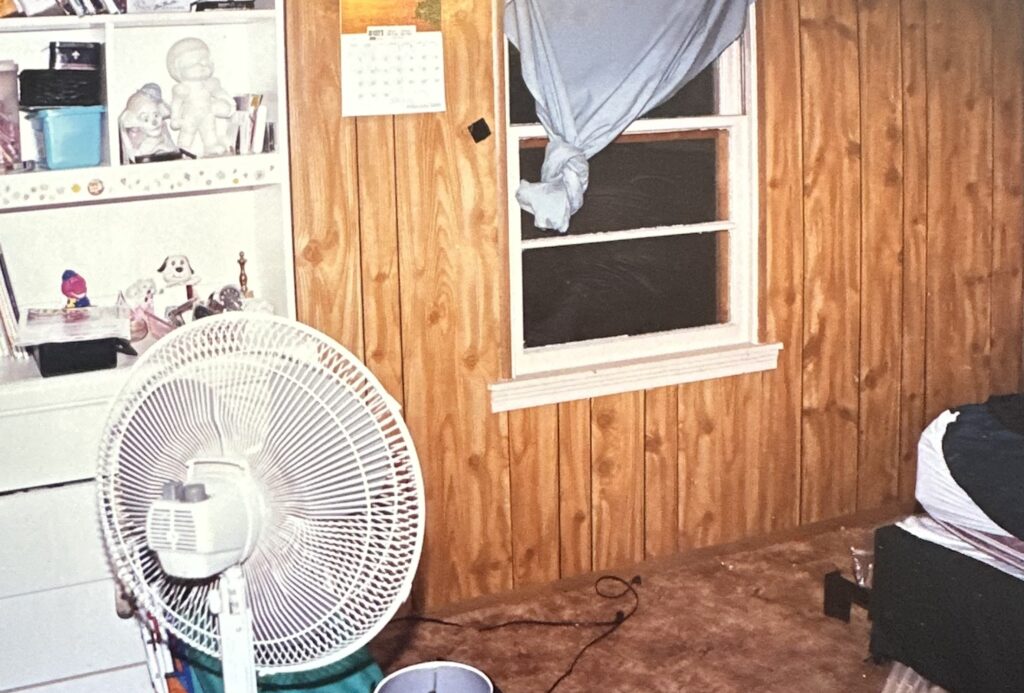
Miller said the testing revealed apparent blood smears on the bedroom wall and floor.
He also observed what appeared to be drag marks.
Those marks extended from the bedroom, through a common area and toward the back door.
According to Miller, the marks ended at that door.
Could someone have dragged Becky through the house before placing her body in a vehicle?
Taylor’s account does not explain the apparent drag marks.
However, additional forensic testing would need to establish what caused them.
Two cadaver dogs alerted beneath the house
Another view of the home linked to Becky Beard’s murder, where retired police captain Richard Miller says investigators discovered apparent blood evidence and drag marks.
Miller’s investigation took another unexpected turn when a dog handler brought two cadaver dogs to the property.
The first dog searched the house and alerted beneath the kitchen area, near the back door.
The handler then brought in a second dog.
That dog searched from another direction and alerted at the exact same location.
Miller crawled beneath the house and began digging by hand.
A few inches below the surface, he discovered soft white material.
He immediately thought about the clothing Becky reportedly wore when she disappeared.
However, Miller never determined what he had found.
He said a district attorney’s investigator and the Clute police chief arrived at the property.
They ordered him to stop digging because Taylor’s trial was approaching.
Miller complied and left the excavation unfinished.
Officials never secured the home as a crime scene during that investigation.
Linda Barnes found a shovel and shoe beneath the house
Linda Barnes discovered this shovel beneath the Clute home linked to Becky Beard’s murder. The family says investigators never entered it into evidence.
Becky’s mother conducted her own investigation into her daughter’s disappearance.
During her search beneath Taylor’s former home, Linda discovered a short-handled shovel and a shoe.
Linda described burn marks on the shovel. She also claimed it carried dirt similar to soil at the suspected burial site.
According to the family, investigators never entered either item into evidence.
During her recorded interview with Taylor, Linda confronted him about the shovel.
Taylor said he could not remember leaving it beneath the house.
He suggested he might have obtained it from his father or mother.
Years later, Miller discovered apparent blood evidence and drag marks inside the same home.
Two cadaver dogs also alerted beneath the property.
Miller began digging and uncovered unidentified white material.
However, officials ordered him to stop before he could identify it.
Did Linda and Miller discover evidence connected to Becky’s disappearance?
Investigators never established that connection through the forensic testing documented in the available interviews.
Did Paul Taylor place Becky beneath the house?
Thumbnail for an article examining conflicting accounts regarding whether Paul Taylor Jr. declined legal representation in the Rebecca Beard murder case.
Taylor claimed he wrapped Becky in bedsheets and roofing paper before placing her body in his car.
He said he later drove to a remote location and buried her.
However, Linda confronted him about the shovel she had discovered beneath his home.
Taylor said he could not remember placing it there.
Miller’s discovery raises another question.
Why did two cadaver dogs alert beneath the home if Taylor immediately transported Becky to another location?
The alerts alone cannot establish that Becky’s body was beneath the house.
They also cannot determine whether someone moved her remains.
Investigators would need additional physical evidence to establish either possibility.
Did investigators recover evidence of a handgun or shotgun?
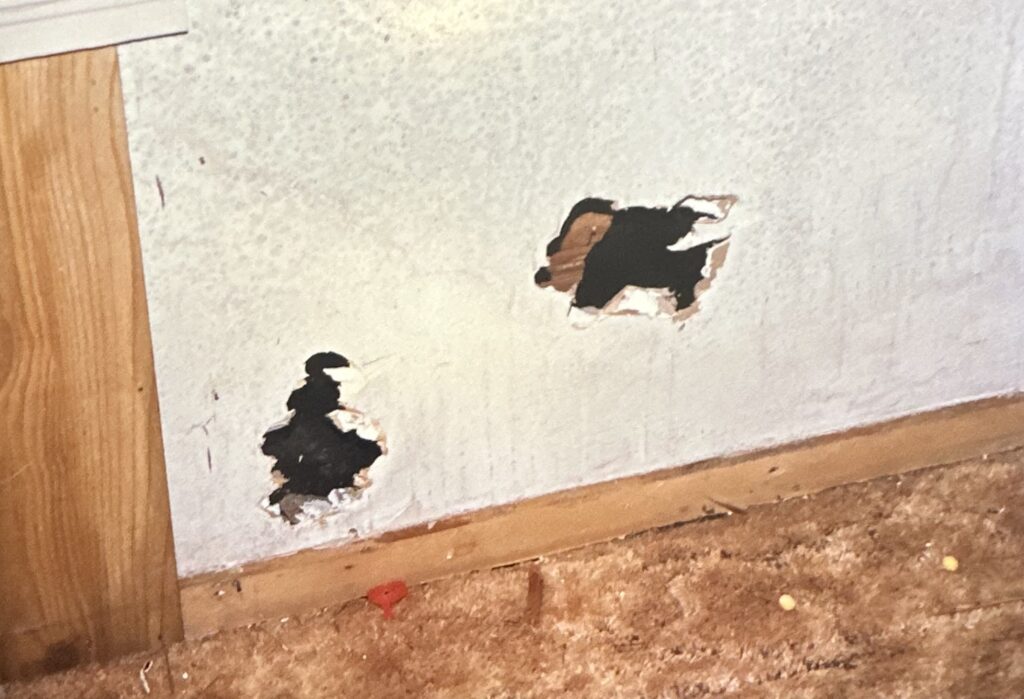
Two suspected bullet holes documented inside the Clute home. Retired Freeport police captain Richard Miller believes a large-caliber handgun, possibly a .357, could have caused them. He disputes the theory that they came from a shotgun.
Taylor admitted that he shot Becky but did not identify the firearm’s caliber during his interview with Linda.
He claimed he found a gun in his mother’s attic and brought it home.
Miller recalled discovering two holes through the bedroom floor, behind the baseboard.
He believed the holes appeared consistent with a large-caliber handgun.
During my interview, Miller examined photographs from the investigation.
He rejected the suggestion that the holes showed evidence of a shotgun blast.
Miller said he believed a handgun could have caused them. He mentioned a .357 as one possibility.
However, he did not identify a specific weapon.
Newly uncovered case records also reference a Remington shotgun.
Miller said he had never heard about that shotgun during his involvement in Becky’s case.
He also explained that investigators sometimes collect multiple firearms for elimination testing.
The available interviews do not establish whether investigators recovered bullets or conducted ballistics testing in Becky’s murder.
Did investigators ever identify the weapon that killed Becky?
Paul Taylor’s timeline raises additional questions
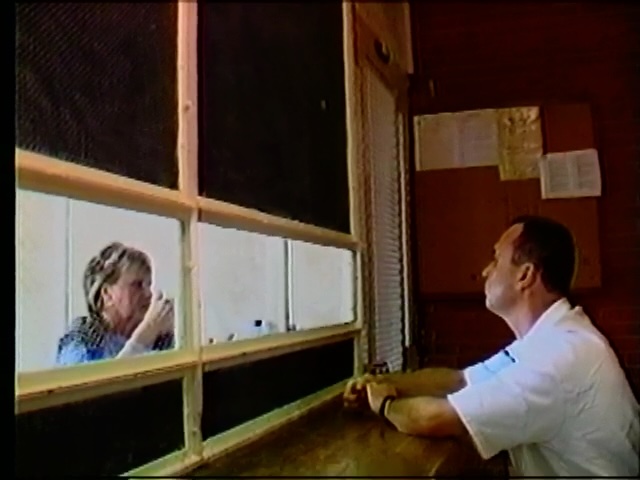
Linda Barnes confronts Paul Taylor about her daughter’s murder during a prison interview. Taylor claimed heavy drinking affected his memory of the night Becky disappeared.
Taylor repeatedly claimed that heavy drinking affected his memory.
He estimated that he and Becky left the Excalibur Club around 12:30 or 1 a.m.
He said he drank approximately 10 alcoholic drinks that night.
After the shooting, Taylor claimed he struggled to decide what to do with Becky’s body.
He described wrapping her in sheets and placing her in his car during daylight.
However, he also said he spent much of the following day recovering from the alcohol and cleaning the house.
Linda confronted him about another reported incident.
According to Linda, a tow-truck operator and a neighbor described Taylor backing his car into a ditch near his home.
Taylor claimed he could not remember the incident.
He also disputed whether it happened.
These details leave questions about when Taylor moved Becky’s body and what happened outside the home.
What happened to Becky’s missing remains?
A recreation of the outfit Becky Beard reportedly wore the night she disappeared from Freeport, Texas, on March 1, 1986. Her family continues searching for her remains nearly 40 years later.
Taylor maintained that he took investigators to the correct burial site.
He described parking near a tree to conceal his activities from a farmer working nearby.
He said he wrapped Becky in bedsheets and roofing paper before burying her.
However, investigators failed to recover her remains.
Taylor expressed surprise that they found neither her body nor the sheets.
He suggested wild animals, including feral hogs, might have disturbed the burial site.
That explanation remains unverified.
Meanwhile, Miller’s account introduces another location that investigators never fully examined.
The area beneath the house could hold answers about what happened to Becky after her death.
However, the available evidence does not establish that anyone buried her there.
Court records reference possible remains after Taylor’s guilty plea
Court records uncovered by Becky Beard’s family reference the discovery of her body and plans to establish positive identification after Paul Taylor’s guilty plea in 1995. Becky’s remains have never been recovered or positively identified.
Becky’s family has spent decades searching for answers.
Their investigation uncovered court records that reference her body and a Remington shotgun after Taylor’s guilty plea in February 1995.
The handwritten court notes also reference investigator Larry Bullard.
One entry describes plans for Bullard to testify about finding Becky’s body. It also references additional time to establish positive identification.
The family says it learned about these records decades later.
During my exclusive interview, Miller said he knew nothing about investigators recovering Becky’s remains.
He also said he had never heard about a Remington shotgun in connection with the case.
Miller questioned why the family would not have learned about such a discovery.
He explained that investigators would ordinarily seek identification through dental records, DNA testing or other forensic methods.
The court documents raise questions about what investigators recovered after Taylor’s guilty plea.
Did investigators discover possible human remains?
Where did those remains go?
Did anyone submit them for forensic identification?
Why did Becky’s family learn about these records decades later?
The documents do not establish that investigators positively identified Becky’s body.
Her family continues to search for her remains.
Why did officials stop the excavation?
The home linked to Becky Beard’s murder. Retired Freeport police captain Richard Miller says investigators found apparent blood evidence and drag marks inside. Two cadaver dogs also alerted beneath the property.
Miller’s account presents one of the most significant unanswered questions in this investigation.
Investigators had apparent blood evidence inside the home.
They observed possible drag marks leading toward the back door.
Two cadaver dogs independently alerted beneath the property.
Miller then discovered unidentified white material while digging at that location.
Yet officials ordered him to stop before he could identify it.
Miller said they cited concerns about the upcoming trial.
He never personally entered physical evidence from that excavation into the case.
Nearly four decades after Becky disappeared, her family continues to search for her remains.
Taylor’s confession established his involvement in her murder. However, it did not answer every question about what happened inside the home or where Becky’s body went.
The original forensic reports, evidence logs and sealed court records could help resolve those questions.
Did investigators overlook evidence that could finally lead Becky’s family to her remains?
For Becky’s mother, sister and daughter, the search for answers continues.
My new book, When Two Worlds Collide During WWII, follows two families on opposite sides of World War II and the remarkable events that eventually brought their lives together in Wisconsin.
The story is based on my own family history, with real people, family photographs and stories passed down through generations.
Disclosure: As an Amazon Associate, I earn from qualifying purchases.
Retired Freeport police captain Richard Miller reveals evidence discovered inside a home linked to the Becky Beard murder case, including apparent blood evidence, drag marks and cadaver dog alerts.
Nearly 40 years after Rebecca “Becky” Beard disappeared, a retired Freeport police captain is revealing evidence investigators discovered inside a home believed to be connected to her murder.
In my exclusive interview, Richard Miller describes apparent blood evidence, drag marks and two cadaver dogs that alerted beneath the home. He also recalls finding unusual material while digging before officials ordered him to stop.
Despite those discoveries, investigators never secured the home as a crime scene.
Watch my exclusive interview with Richard Miller
Richard Miller reveals evidence discovered inside the home
Retired Freeport police captain Richard Miller speaks exclusively with Investigative Reporter Tammy Rose about evidence discovered inside a home linked to Becky Beard’s murder.
Miller spent 22 years with the Freeport Police Department. He was a rookie when Becky disappeared in March 1986. Years later, he revisited the investigation as a police captain.
During a search of the home, investigators used luminol to look for possible blood evidence. Miller describes apparent blood smears on a wall and floor, along with marks leading toward the back door.
Two cadaver dogs also alerted beneath the house.
Officials ordered Miller to stop digging
Miller says he began digging beneath the home after the dogs alerted. During that search, he discovered unusual white material.
Before he could determine what he had found, officials ordered him to stop.
The material has not been confirmed as human remains. However, Miller’s account raises questions about evidence investigators may have left behind.
Why wasn’t the home secured as a crime scene?
Inside the home investigators searched in connection with Becky Beard’s murder. Retired Freeport police captain Richard Miller describes evidence discovered during the investigation.
John Cone previously told investigators that Paul Taylor Jr. allegedly confessed to him about Becky’s death.
Cone reported that Taylor had removed a mattress and carpet from the home. He also offered authorities a key to the property.
Yet investigators did not immediately secure and process the residence following Cone’s report.
Miller’s account now provides additional details about what investigators discovered during a later search.
Newly uncovered records raise more question
Newly uncovered investigative notes reference finding Becky Beard’s body. Her family says they were never informed of such a discovery, raising questions about what investigators knew in 1995.
Becky’s family has spent decades searching for her remains. They have also reviewed investigative reports and court records in their effort to uncover what happened.
Records involving possible human remains have raised additional questions for the family.
Miller’s interview offers a new perspective on the evidence discovered beneath the house. However, it does not establish that investigators recovered human remains.
Paul Taylor Jr. pleaded guilty in connection with Becky’s death in 1995. Her body has never been recovered.
My new book, When Two Worlds Collide During WWII, follows two families on opposite sides of World War II and the remarkable events that eventually brought their lives together in Wisconsin.
The story is based on my own family history, with real people, family photographs and stories passed down through generations.
Disclosure: As an Amazon Associate, I earn from qualifying purchases.
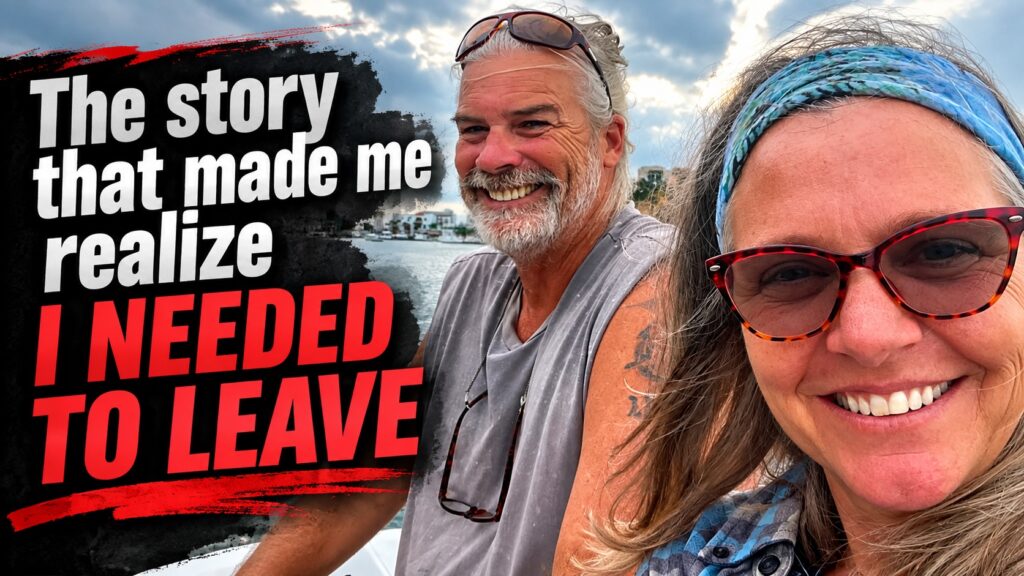
I’m sharing my story in hopes it helps someone else recognize when it’s time to leave.
I was 51 when I entered a relationship that moved very quickly.
What began as a whirlwind romance eventually became something I never imagined I would experience: emotional and physical abuse.
I’ve debated whether to write this.
I’m not writing it to identify or publicly shame the person I was with. I won’t name him.
I’m writing because somewhere another woman—or man—may be explaining away things happening behind closed doors just as I did.
For a long time, I did exactly that.
I minimized the bruises and changed my behavior. Walking away from arguments became routine. Sometimes I slept in another room. I even recorded what was happening, hoping he could see for himself what I was experiencing.
Nothing worked.
If sharing my experience helps one person recognize that they don’t have to wait for something worse to happen before leaving an abusive relationship, then telling it is worth it.
The first time he put his hands on me
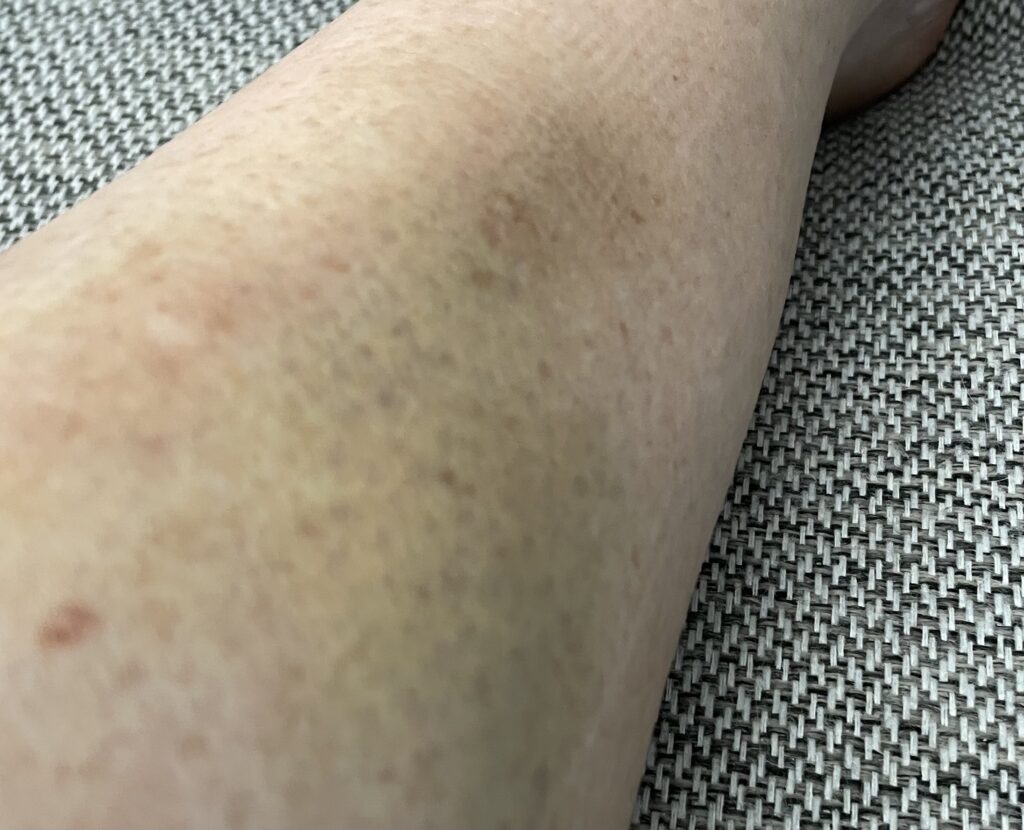
I photographed the bruising on my leg after the first time he physically hurt me.
Before this relationship, I had never had a man physically hurt me.
The first time it happened, I was stunned.
He kneed me and I fell to the ground.
But it wasn’t the last time.
He would jab his finger hard into my chest. He grabbed my neck. There were bruises, abrasions and other marks on my body.
One night, he grabbed me by the leg while I was lying in bed and dragged me into the living room because he wanted me to sleep in the guest room.
So the next time there was an argument, I tried something different.
I went to the guest room.
That didn’t work either.
He broke through the door.
There were other times he damaged or broke down doors when I went into another room because I was trying to avoid a confrontation.
That became one of the most frightening parts of the relationship.
There was nowhere I could go inside my own home to make an argument stop.
If I stayed, things could escalate.
Walking away meant he could follow me.
Even going into another room didn’t necessarily keep him out.
I kept changing what I did because I thought maybe I could prevent the next incident.
Nothing worked.
The physical incidents happened when he was drinking
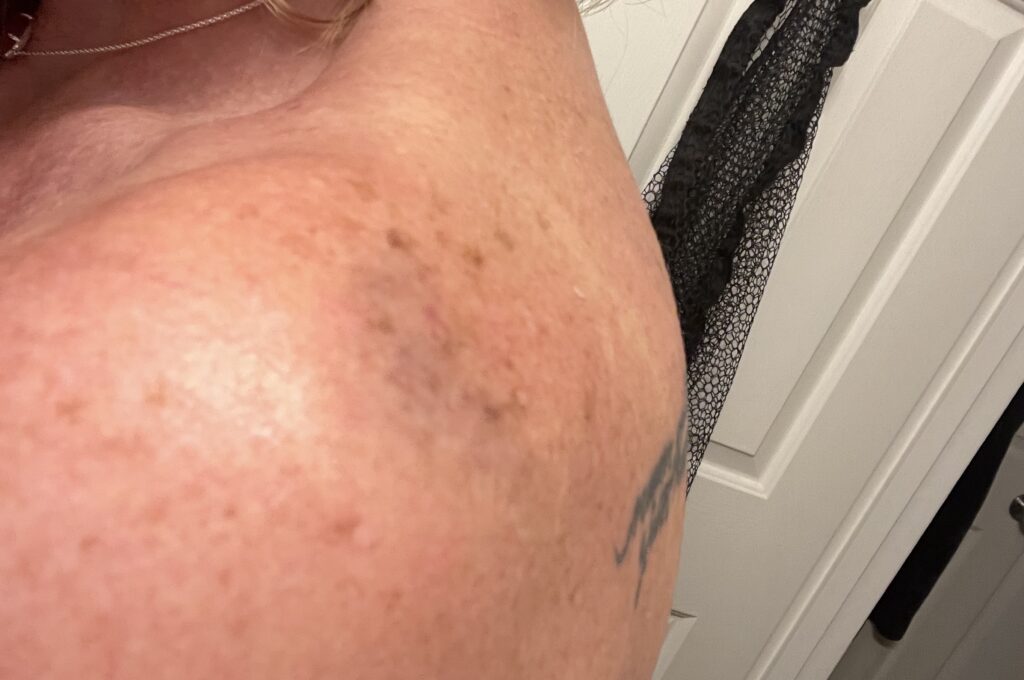
I photographed the bruising on my shoulder after one of the physical incidents.
The physical abuse happened when he had been drinking.
The next day, there were times he couldn’t remember what he had done.
But I remembered.
I remembered everything.
He sometimes remembered nothing.
I was left with the bruises, damaged doors and memories of what had happened. Then I sometimes found myself trying to explain those events to someone who said he couldn’t remember them.
I even tried recording him.
It wasn’t to embarrass him. I hoped that if he could hear himself later, he might understand how bad things had become.
Maybe hearing his own behavior would change something.
It didn’t.
I kept moving the line for what counted as abuse
Then came the explanations.
I was told it was my fault.
One of the things I remember most was the justification that he had never punched me in the face.
For a while, I actually used that distinction myself.
He didn’t punch me.
Was this really abuse?
Was I making too much of it?
Had I done something to cause it?
Looking back, those questions show me how much my understanding of what was normal had changed.
Instead of asking why someone I loved was hurting me, I was asking whether I had been hurt badly enough for it to count.
Eventually, the line for what I considered abuse kept moving.
Why I documented the injuries but never called police
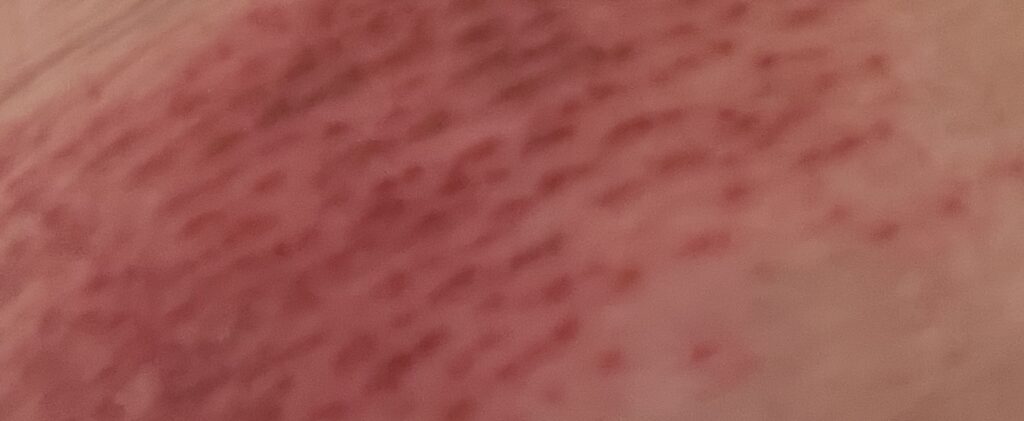
I photographed this abrasion after being dragged. I kept pictures of my injuries even though I never called police.
I photographed some of my injuries.
I took pictures of bruises, abrasions and marks on my body because somewhere inside me, I knew I needed to document what was happening.
But I never called police.
I worried about what an arrest could do to his career.
Even while I was documenting injuries I believed he had caused, part of me was worried about protecting him from the consequences.
That is difficult for me to admit now.
I don’t share it because I’m proud of that decision.
I share it because someone reading this may understand it.
Abusive relationships can make you question things that once would have seemed obvious.
I could look at bruises on my own body and still find reasons to minimize them.
There had been no punch to the face.
I never called police.
No trip to the hospital followed.
So maybe it wasn’t that bad.
At least, that is what I told myself.
Editor’s note: The photographs accompanying this story were taken by me at the time and document injuries I experienced during the relationship. I am sharing only a few of them.
It wasn’t only physical
There were accusations of cheating.
Arguments could somehow get turned around until I was defending myself against things I hadn’t done.
Over time, I felt smaller.
I felt ashamed.
I felt worthless.
The National Domestic Violence Hotline lists behaviors such as extreme jealousy, preventing someone from making their own decisions, intimidation, blaming a partner for abusive behavior and other controlling behaviors among warning signs of abuse.
At the time, I didn’t fully understand what was happening to me.
I was too busy trying to figure out how to stop the next argument.
I left once — and went back
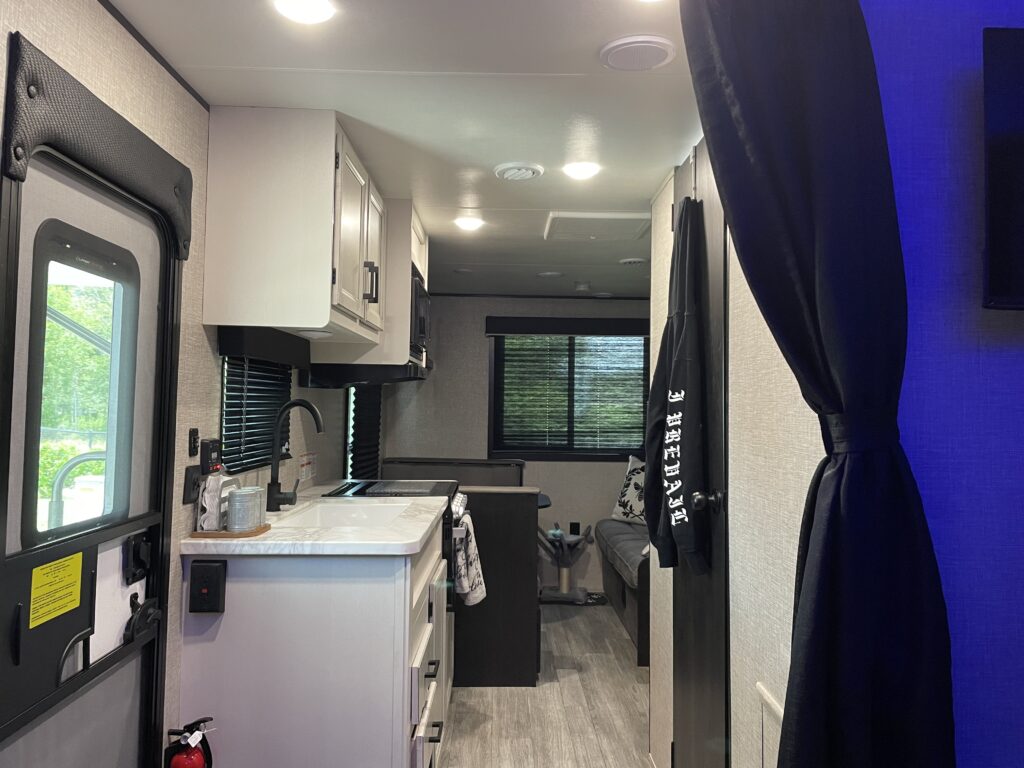
I bought this RV and left. I went to a campground, but eventually I was convinced to return.
At one point, I bought an RV and left.
I went to a campground.
He found me there and convinced me to come back.
So I did.
For a long time, that embarrassed me.
Why would someone leave an abusive relationship and then return?
I understand that question differently now.
Leaving isn’t always a single moment.
Sometimes you leave and go back.
You may not be ready.
You may still love the person.
There can still be hope that things will change.
You may believe that changing your own behavior will change the relationship.
And sometimes you have to leave more than once before you stay gone.
The trip that changed everything
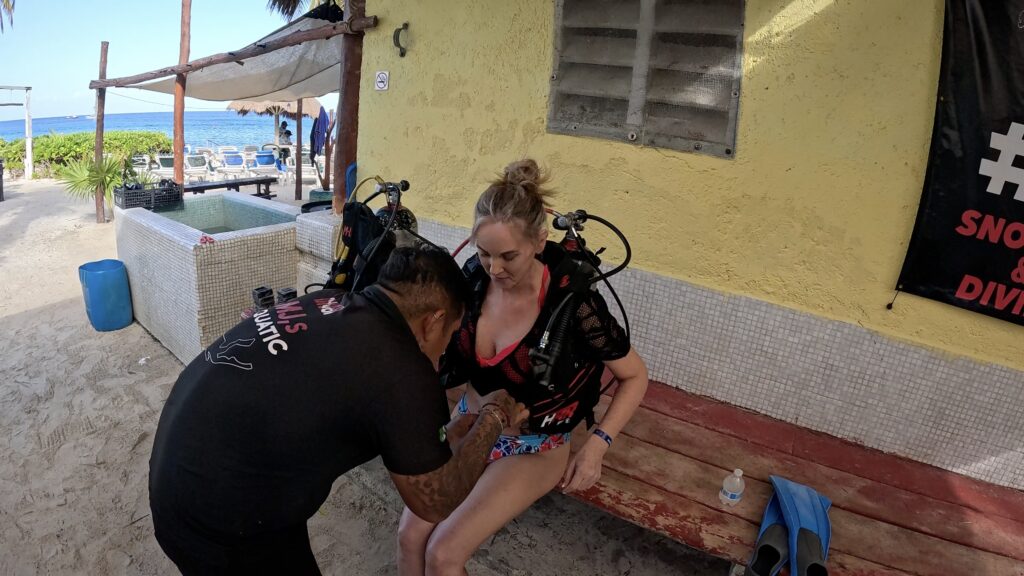
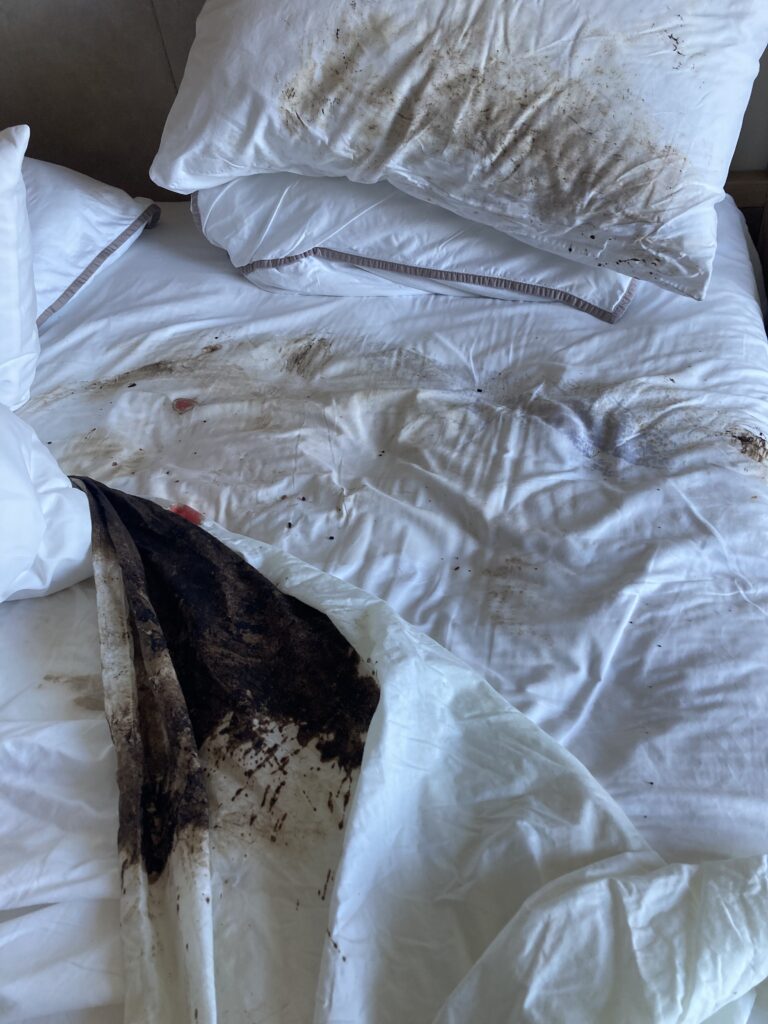
I became sick during our trip to Cozumel. What happened in that hotel room would ultimately change everything.
My trip to Cozumel happened in February.
I became extremely sick. At one point, I was passed out in our hotel room.
Someone apparently heard yelling and screaming coming from the room and became concerned enough to contact authorities.
People came to our room and insisted on checking on me to make sure I was breathing.
I learned about it the following morning.
That stayed with me.
Strangers had heard enough from outside our hotel room that they were worried about the person inside it.
But I still didn’t leave.
That’s important to me now because there wasn’t one dramatic moment when everything suddenly became clear.
The realization came slowly.
I had already tried changing my behavior. Walking away from confrontations didn’t work. Neither did going into another room or sleeping somewhere else. I even recorded what was happening, hoping he could hear and see his behavior afterward.
I had even left once before.
But I went back.
Months later, Lynette Hooker disappeared
Then, months after my Cozumel trip, Lynette Hooker disappeared on Easter Sunday.
As a reporter, I followed her story as it began receiving national attention.
But this time, I wasn’t experiencing a story only as a journalist.
After everything that had happened in my own relationship, her disappearance affected me personally.
Cozumel came back to me.
So did the bruises I had photographed.
I remembered the doors that had been broken when I tried to get away from confrontations.
Being dragged from my bed by my leg was impossible to forget.
Most of all, I remembered how many times I had convinced myself it wasn’t that bad because I had never been punched in the face.
And one thought kept coming back to me:
I don’t want to become another statistic.
I wasn’t comparing my circumstances to Lynette’s or claiming to know what had happened to her.
Her disappearance simply forced me to confront a question I had avoided for too long:
What was I waiting for?
My first trip without him. I traveled to Italy alone and began discovering what life on my own could look like.
I didn’t know whether my relationship would ever become more dangerous.
I didn’t need to know.
For months, I had been waiting for some unmistakable event that would finally give me permission to leave.
I finally realized I didn’t need one.
I already knew I didn’t feel safe.
That was enough.
This time, I just left
Why I’m telling my story now
I’m an investigative reporter.
I’ve interviewed victims and covered crimes throughout my career.
Much of my work has involved asking difficult questions.
Yet I found myself in a situation I once believed could never happen to me.
That realization carried a lot of shame.
But intelligence, education, age and professional success don’t make someone immune from an abusive relationship.
That is one of the reasons I’m sharing photographs I once kept private.
Another person may be looking at bruises on their own body tonight and making the same calculations I made.
“He didn’t really hit me.”
“It wasn’t that bad.”
If this sounds familiar, help is available
If you’re experiencing relationship abuse—or questioning whether what’s happening to you is abuse—you can speak confidentially with an advocate at the National Domestic Violence Hotline.
Call 800-799-SAFE (tel:800-799-SAFE) (7233), text START to 88788, or use the Hotline’s online chat. The service is available 24/7.
If you are in immediate or life-threatening danger, call 911 (tel:911).
My new book, When Two Worlds Collide During WWII, follows two families on opposite sides of World War II and the remarkable events that eventually brought their lives together in Wisconsin.
The story is based on my own family history, with real people, family photographs and stories passed down through generations.
Disclosure: As an Amazon Associate, I earn from qualifying purchases.